
Aircraft Corrosion: Causes, Prevention, and Treatment

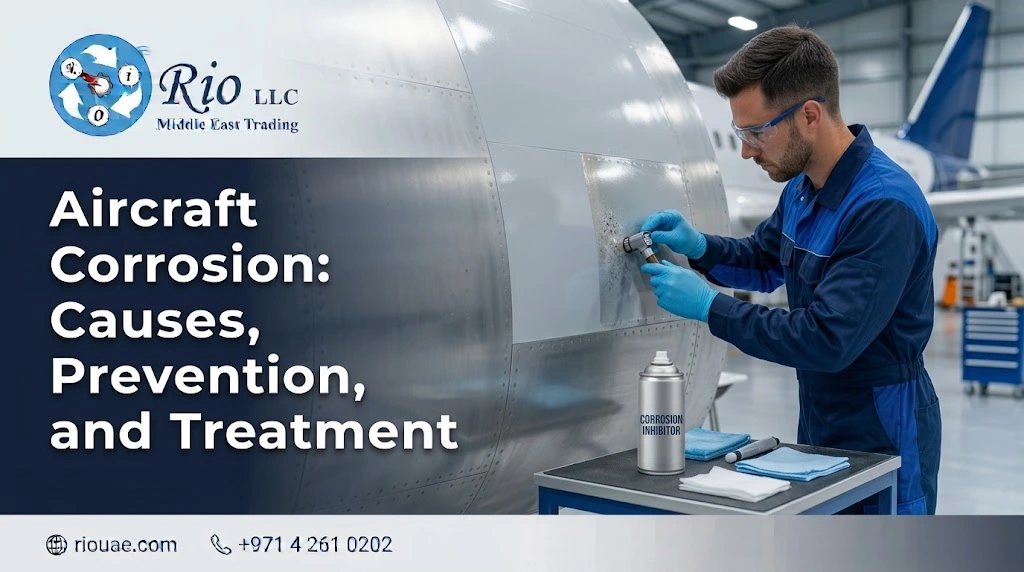
Aircraft corrosion prevention is part of maintaining the condition of aircraft structures and components over time. Corrosion can develop when materials are exposed to moisture, salts, contaminants or other environmental conditions. The right response depends on the material, the location and extent of the damage, and the applicable aircraft maintenance data.
A corrosion-control programme brings together scheduled inspections, condition reporting, preventive measures and approved repair actions. Aerospace corrosion protection products can support particular tasks, but they do not replace inspection or determine whether damaged material is serviceable.
This guide explains common causes of aircraft corrosion, ways operators approach prevention and how corrosion findings are managed. It is general information, not an inspection or repair procedure. Follow the aircraft manufacturer’s instructions and the applicable maintenance programme for any specific aircraft or component.
What Is Aircraft Corrosion?
Corrosion is the deterioration of a material through chemical or electrochemical reactions with its environment. In aircraft, the affected material may be a metal or alloy, and the damage can occur on accessible surfaces or in areas that need specific inspection access.
The visible appearance can vary. A change in colour or surface texture may call for further assessment, but this article cannot determine whether a particular mark is corrosion or how much material may be affected. Qualified personnel need to assess findings using the applicable maintenance data.
The FAA’s AC 43-4B, Corrosion Control for Aircraft provides guidance for developing corrosion-control programmes and states that manufacturer recommendations take precedence where they apply. Corrosion Control for Aircraft
Common Causes of Aircraft Corrosion
Corrosion risk is influenced by the material, its condition and the environment. Common contributing conditions can include:
- Moisture: water may remain on or within areas that do not dry or drain readily.
- Salt exposure: coastal or marine environments can expose surfaces to salt-laden moisture.
- Contamination: residues or trapped materials can contribute to corrosive conditions.
- Damaged protective finishes: scratches, chips or worn coatings may expose underlying material.
- Joints and crevices: moisture and contaminants can collect where surfaces meet.
- Maintenance and storage conditions: how components are cleaned, handled, stored and protected can affect their exposure.
These are general factors, not a diagnosis of a specific component. A corrosion-control programme needs to account for aircraft-specific materials, known exposure conditions, the operator’s maintenance programme and any instructions issued by the manufacturer.
Areas That May Need Corrosion Monitoring
The relevant inspection areas depend on the aircraft design and its maintenance data. In general, teams may pay particular attention to locations where moisture, contamination or damage to finishes could be more likely, including joints, seams, drain areas, access panels and other places identified by the manufacturer.
The aircraft maintenance programme and service information define inspection scope and frequency. The FAA notes that inspection frequency, identification and treatment responsibilities belong to the operator and should be based on applicable guidance, manufacturer recommendations or the operator’s programme. Corrosion Control for Aircraft
Regular monitoring can help maintenance teams record changes and route findings for assessment. It does not mean that every visible surface issue is corrosion or that every sign can be treated the same way.
Building an Aircraft Corrosion Prevention Programme
A structured aircraft corrosion prevention programme combines scheduled inspections with clear processes for reporting and evaluating findings. Depending on the operator’s requirements, the programme may include:
- Defined inspection tasks: use the approved maintenance programme and aircraft-specific instructions.
- Environmental awareness: consider the exposure conditions relevant to the aircraft’s operation and storage.
- Consistent reporting: record the location, observations and relevant context for maintenance review.
- Timely evaluation: refer findings to qualified personnel and assess them against the required limits.
- Preventive measures: apply only the cleaning, protection or preservation methods specified for the task.
- Follow-up records: document completed maintenance and any remaining action according to company procedures.
EASA’s continuing-airworthiness rules refer to corrosion prevention and control programmes as part of continuing airworthiness. They also require maintenance to use applicable maintenance data. Review the EASA Easy Access Rules for Continuing Airworthiness for the relevant requirements and guidance. EASA
The Role of Protective Coatings and Compounds
Protective coatings and corrosion-inhibiting compounds may be used where specified to help protect surfaces or components. The product category, duration of protection and method of use depend on the exact product and maintenance task.
Aerospace corrosion protection products are not interchangeable. A temporary protective compound, a coating and a corrosion treatment may serve different functions. Teams should confirm the product reference, material compatibility, intended application and any required documentation before sourcing or use.
RIO’s surface protection category includes an anticorrosion protection subcategory. Its coatings category lists coating families separately. These categories help buyers browse product types, but the aircraft maintenance data and individual product documents determine whether an item fits a particular task. RIO
SOCOMORE describes corrosion-inhibiting compounds and preventive coatings on its anticorrosion protection page. This is manufacturer information about product families, not an instruction for a particular aircraft. Solutions

Inspection and Early Evaluation
Inspection is central to corrosion control aviation programmes. The inspection method and scope should come from the applicable maintenance information. When a concern is found, personnel document it and determine the next action using the aircraft-specific limits and procedures.
An observation should not be treated as a confirmed damage assessment based only on a photograph or general description. The location, material, extent and aircraft instructions all matter. If corrosion is suspected, the responsible maintenance personnel should assess it and decide whether additional inspection or repair action is required.
Consistent records can help a maintenance organization track repeated findings and monitor whether preventive actions are working. They also support handovers among inspection, engineering, maintenance and procurement teams.
Responding to a Corrosion Finding
The response to a corrosion finding depends on its type, location and extent. A general sequence may include recording the observation, consulting the applicable maintenance data, assessing the damage against specified limits and following the approved treatment or repair instructions.
This overview does not provide treatment steps or repair limits. Corrosion removal, surface treatment, replacement and repair are controlled maintenance activities. If damage exceeds the limits in the applicable structural repair or maintenance data, the issue must be referred through the organization’s approved engineering process.
The FAA’s AC 43-4B notes that when corrosion removal exceeds the applicable Structural Repair Manual limits, maintenance personnel should contact the appropriate engineer or aircraft manufacturer for repair instructions. EASA likewise requires use of applicable maintenance data during maintenance. faa.gov
Aircraft Corrosion Prevention and Surface Preparation
Cleaning and surface preparation may support a corrosion-control task, but they are not the same as corrosion treatment. A cleaner may remove specified contamination; a surface treatment may condition the material; a protective product may provide a defined barrier. Each has a different role and technical documentation.
If a task calls for cleaning or preparation before protection, the product and process need to be selected according to the maintenance data. RIO lists relevant products in its surface preparation category, separate from its surface protection and coatings categories.
This distinction helps prevent a common sourcing problem: requesting a broad “corrosion chemical” without describing the work. A more precise enquiry states whether the requirement concerns cleaning, deoxidizing, corrosion-inhibiting protection, coating or another specified process.
Choosing Aerospace Corrosion Protection Products
When sourcing aerospace corrosion protection products, identify the task and gather available technical details. Helpful information includes:
- The aircraft component or material involved.
- The required function, such as temporary protection or a specified coating.
- The product name, code or manufacturer reference, if known.
- Any relevant maintenance or engineering specification.
- Required Technical Data Sheet or Safety Data Sheet.
- Quantity, packaging and delivery destination.
A product listing can help identify the correct category, but it does not confirm suitability for a particular aircraft. The maintenance organization should verify the product against the applicable instructions and product documents before use.
Frequently Asked Questions
What causes aircraft corrosion?
Corrosion can develop when susceptible materials are exposed to conditions such as moisture, salts, contaminants or damaged protective finishes. The factors relevant to an aircraft depend on its materials, design and environment.
How is aircraft corrosion prevented?
Operators use corrosion-control programmes based on applicable maintenance data. These may include scheduled inspections, condition reporting, preventive measures and product use specified for particular tasks.
Can a corrosion inhibitor repair existing aircraft damage?
A protective compound should not be treated as a repair for existing damage. Findings need to be assessed by qualified personnel against the applicable maintenance data, limits and repair instructions.
Are all aerospace corrosion protection products suitable for every aircraft?
No. Products have specific uses and compatibility information. Confirm the exact product, substrate and intended task against its documentation and the applicable aircraft instructions.
Where can I browse corrosion protection products?
RIO lists relevant product families in its surface protection category and coatings in its separate coatings category.
Support a Consistent Corrosion-Control Approach
Effective aircraft corrosion prevention depends on a programme that connects inspection, reporting, technical assessment and approved maintenance actions. Corrosion control aviation work should be based on the aircraft’s instructions and maintenance programme, while protective products should be selected for their specified use.
To explore aerospace corrosion protection products, start with RIO Middle East’s surface protection category. Include the product reference, application, quantity and destination in your enquiry so the team can review the requirement and provide relevant product information.