Why Aircraft Cleaning Chemicals Are Different From Regular Cleaners

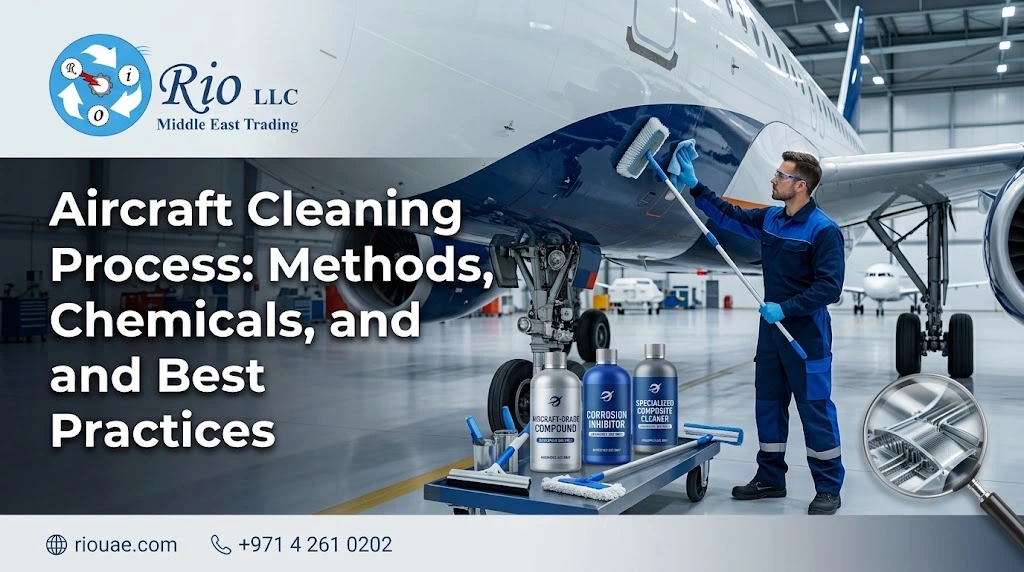
A cleaner that works well on a floor, vehicle or household surface may not be suitable for an aircraft. Aircraft contain varied materials and finishes, including metals, painted surfaces, composites, plastics, transparent panels, seals and interior fabrics. A product intended for one of these surfaces may not be appropriate for another.
That is why aircraft cleaning chemicals are selected according to the task, material and applicable maintenance instructions. Their role is not simply to remove visible dirt: the product and method also need to fit the surface and the work that follows. Aerospace cleaners may be designed for particular applications, but the category name alone does not prove that a product is suitable for every aircraft or component.
This guide explains how aircraft cleaning chemicals differ from regular cleaners, what to check when choosing them and what people mean when they search for aviation approved cleaners. It is general information, not an aircraft-specific cleaning procedure. Always follow the applicable maintenance data and the current product documentation.
Aircraft Have Many Different Surfaces
An aircraft is not one uniform surface. Its exterior and interior can include different metals, coatings, composites, plastics, windows, seals and fabrics. Each material can respond differently to cleaning agents, tools, temperature and application methods.
A product suitable for a painted metal surface may not be suitable for a transparent plastic panel or an interior textile. Some solvents and cleaners can damage materials or finishes if used outside their intended application. The FAA’s Airframe & Powerplant handbook, for example, cautions that certain solvents can damage transparent acrylic plastics. This is one reason maintenance teams need to check material compatibility before selecting a cleaner. Airframe Handbook
Regular household or general-purpose cleaners are usually selected for broad consumer uses. In contrast, aircraft cleaning chemicals need to be considered in relation to the aircraft material, the specific cleaning task and any process requirements. “Works on metal” or “safe for vehicles” is not enough information to confirm aircraft suitability.
Product Selection Depends on the Cleaning Task
The first question is not simply “Which cleaner is strongest?” It is “What needs to be removed, from which surface, and what happens next?” Different products may be designed to remove general soil, oily contamination, residues or other types of dirt. The task helps determine which product family to review.
Examples of aerospace cleaning product types include:
- Exterior cleaners for specified aircraft surfaces.
- Interior cleaners for particular cabin materials, such as glass, fabrics or leatherette.
- Degreasers for specified oily contamination.
- Surface preparation cleaners used before processes such as coating or bonding.
- Specialist cleaners for particular maintenance or manufacturing applications.
These groups are not interchangeable. A cleaner intended for an aircraft cabin surface may not be intended for exterior use. Similarly, a process cleaner for a metal component should not be assumed suitable for windows, fabrics or composites.
RIO’s surface preparation category includes manual surface cleaning and related product families. Its catalogue also lists specific products such as SOCOCLEAN Exterior Aircraft Cleaner, SOCOCLEAN Glass Cleaner and SOCOCLEAN Carpet Cleaner. The product name and listing help identify the intended category; the current documentation should be checked for a particular use. RIO
Compatibility Matters More Than “Cleaning Power”
A household cleaner may be marketed around fragrance, shine or grease removal. For aircraft use, the relevant questions are more specific: Is the product intended for this material? Could it affect a coating, seal, adhesive or adjacent component? Does the product documentation identify any restrictions?
These questions matter because a surface can include layers or nearby materials that are not obvious during a visual check. A cleaning product may contact paint, plastic, rubber, sealant or composite material during application or rinsing. Compatibility has to be assessed for the actual task and according to the relevant instructions.
Aerospace cleaners may be formulated for defined applications, but the term does not guarantee compatibility with all aerospace materials. Check the product’s stated use, technical information, and any listed limitations. Avoid relying on a general description, a similar product name or another user’s experience as proof that a product can be substituted.
Residue and Rinsing Requirements Can Differ
A cleaning process may require a specific application method, dilution, contact time, wipe-down or rinse. Those details vary between products. A product that is suitable for one process may leave residue or require a different follow-up step from another.
Residue can matter if the surface is going to be inspected, coated, bonded or returned to service. The product instructions and maintenance data should define the required outcome. Do not infer that a product is “residue-free,” requires no rinsing or can be left to dry unless the current manufacturer documentation says so for that exact product and use.
For example, SOCOMORE publishes product-specific information for its exterior aircraft cleaner, including use directions and application methods. Those directions apply to that named product and should not be transferred to other aircraft cleaning chemicals. socomore.com
What Does “Aviation Approved Cleaner” Mean?
The phrase aviation approved cleaners is often used in searches, but it should not be taken to mean there is one universal approval that makes a cleaner suitable for every aircraft, every surface and every task. A product listing may identify approvals, specifications or accepted uses, but their meaning depends on the exact product and the context in which the approval applies.
Before treating an item as an aviation approved cleaner, confirm:
- The exact product name, code and formulation.
- The relevant approval, specification or manufacturer reference.
- The aircraft, component, surface or process covered by that reference.
- Whether the information is current and applies to the task at hand.
- Whether the maintenance instructions allow the product or require another one.
Some RIO product pages list product-specific approvals or technical details. For example, the SOCOCLEAN Exterior Aircraft Cleaner listing includes product information and approvals for that product. This should not be read as a blanket approval for other cleaners or applications. Confirm the latest supporting documentation with the manufacturer or supplier before relying on a claim. SOCOMORE Solutions
Different Areas May Need Different Aerospace Cleaners
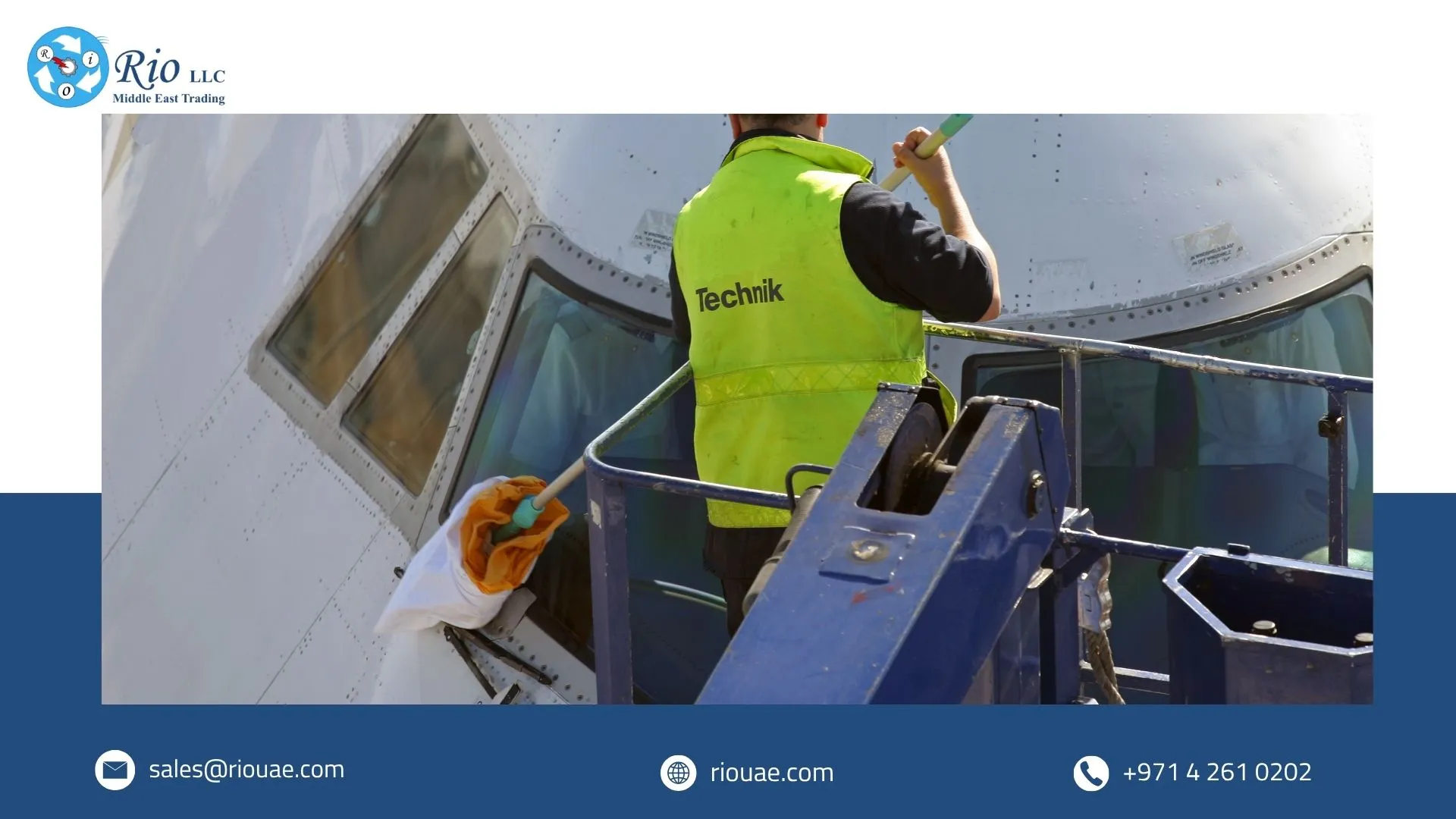
One reason aircraft cleaning chemicals differ from regular cleaners is that aircraft cleaning may involve multiple zones and material types. Exterior fuselage surfaces, landing gear, cabin windows, seats and carpets do not necessarily call for the same product or method.
A maintenance team may need to distinguish between:
- Exterior cleaning: product suitability for the exterior surfaces and the planned cleaning method.
- Transparent surfaces: material-specific care to reduce the risk of scratches or chemical damage.
- Cabin surfaces: products intended for the particular interior material, such as carpet, glass or leatherette.
- Components and parts: cleaners intended for the specified maintenance or manufacturing task.
- Pre-process cleaning: products used before inspection, bonding, painting or other defined work.
This is why aerospace cleaners are often organized by application rather than as one universal aircraft wash. RIO’s surface preparation category offers a starting point for finding relevant cleaning product families. For product-specific requirements, review the individual product page and documentation.
The Cleaning Method Is Part of Product Suitability
Even when the product is appropriate, the method still matters. Some products may be intended for manual wiping, while others may be used with specified equipment or washing systems. The correct method, dilution, contact time and rinse requirements depend on the product instructions and maintenance procedure.
The FAA’s AC 43-4B, Corrosion Control for Aircraft, includes general guidance on aircraft washing and post-wash checks. It discusses precautions such as protecting openings from water or cleaning compound intrusion, mixing products according to manufacturer recommendations and checking drains afterward. The circular is advisory guidance; aircraft manufacturer instructions take precedence when they apply. www.faa.gov
A product’s marketing description should never be used as a substitute for the required procedure. If the aircraft or maintenance instructions specify a cleaning agent or process, follow that data. EASA’s Easy Access Rules for Continuing Airworthiness likewise refer to using applicable maintenance methods, techniques, standards and instructions. www.easa.europa.eu
Documentation Helps Buyers Make Better Comparisons
When comparing aircraft cleaning chemicals, review product documentation rather than relying on short catalogue descriptions alone. A Technical Data Sheet may explain intended uses, characteristics and application details. A Safety Data Sheet provides hazard and handling information. Available documents vary by product and manufacturer.
For a useful enquiry, include:
- Product name, product code or manufacturer reference, if known.
- The surface material and cleaning task.
- The intended method or process, if specified.
- Quantity and packaging requirements.
- Any required technical, safety or approval documentation.
- Delivery destination.
If the product is not known, describe the task and provide the relevant maintenance reference. This gives a supplier a clearer basis for directing the enquiry to suitable product information. It does not replace the maintenance organization’s responsibility to confirm the product against approved instructions.
Why Regular Cleaners May Be a Poor Substitute
A regular cleaner may appear to remove the same visible dirt, but appearance alone does not establish suitability. It may not have documented compatibility with the aircraft material, may have different application or rinse requirements, or may not be covered by the maintenance procedure.
The same caution applies in reverse: a product described as an aerospace cleaner is not automatically right for every aircraft surface or cleaning task. The product reference, use instructions and supporting documents still need to match the intended application.
The safest comparison is not “regular versus aviation” in the abstract. It is whether the specific product is permitted for the specific surface and process under the applicable maintenance data. That distinction helps keep product selection clear and avoids relying on broad labels.
Frequently Asked Questions
Are aircraft cleaning chemicals stronger than household cleaners?
Not necessarily. The important difference is the product’s intended application, compatibility information and documentation. “Stronger” does not mean more suitable for aircraft use.
Are all aviation approved cleaners approved for all aircraft?
No. An approval or listing may apply to a specific product, use or scope. Check the exact reference and current documentation before selecting a cleaner.
Can I use one aerospace cleaner for both the cabin and exterior?
Do not assume so. Cabin and exterior materials vary, and products may be designed for different surfaces. Confirm the intended use on the product documentation and follow the applicable maintenance data.
Where can I browse aircraft cleaning chemicals?
RIO lists cleaning products within its surface preparation category, with separate product pages for individual cleaners. Review the product listing and request current documents for the exact product under consideration.
Choose Aircraft Cleaning Chemicals by Application
Aircraft cleaning chemicals differ from regular cleaners because product suitability depends on more than visible cleaning performance. Surface compatibility, intended use, residue and rinsing requirements, application method, documentation and the scope of any approval all need to be considered.
If you are comparing aviation approved cleaners or aerospace cleaners, start with the specific task and material. Browse RIO Middle East’s surface preparation products, then use the product reference, quantity, packaging and destination when requesting product information or a quotation.