
Aircraft Corrosion Protection: Managing Protective Films Throughout Maintenance

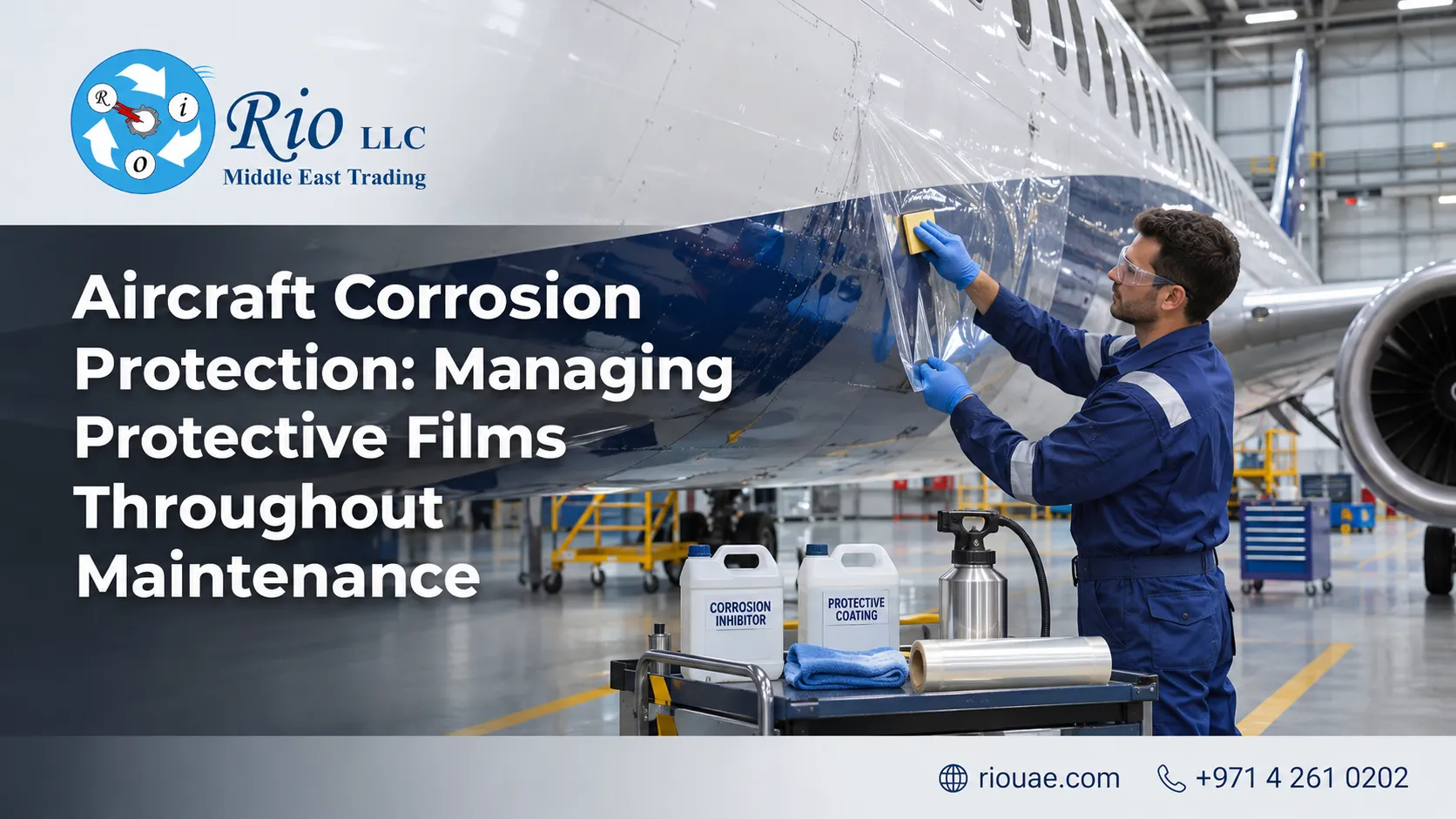
A component can look clean and still need a defined preservation plan before it returns to service or enters storage. Cleaning, inspection, surface finishing and preservation each address different requirements. Aircraft corrosion protection connects these activities by keeping the specified protective system in place throughout the component’s maintenance and operating lifecycle.
For maintenance teams, the practical question is what protection the component requires at its current stage. A part awaiting assembly, an aircraft in service and a component stored for later use can have different requirements. The answer comes from the applicable aircraft or component instructions, supported by current product documentation.
This guide explains how corrosion inhibitors fit into protection planning, what to check when comparing protective materials and how records and follow-up support aircraft maintenance safety. It focuses on managing protection over time; component assessment, application parameters and repair decisions remain tasks for qualified personnel using the applicable maintenance data.
What Does Aircraft Corrosion Protection Include?
Aircraft corrosion protection refers to measures used to limit a susceptible material’s exposure to conditions that promote corrosion. Depending on the specified system, these measures may include protective finishes, corrosion-inhibiting compounds, sealing arrangements and preservation requirements.
It helps to separate three questions: Is the component’s condition acceptable? What protection does the maintenance task require? How will that protection be checked or removed later? Answering only the second question leaves the overall maintenance decision incomplete.
For background on corrosion causes and the response to damage, read RIO’s article on aircraft corrosion prevention. The discussion here concentrates on protective materials and the decisions surrounding their use.
How Corrosion Inhibitors Support Surface Protection
Corrosion inhibitors are substances used to reduce corrosive attack under defined conditions. In aerospace maintenance, corrosion-inhibiting compounds, often abbreviated as CICs, can provide a protective film on specified surfaces. Products differ in film characteristics, compatibility, intended exposure and removal requirements.
Some compounds also displace water. Others primarily provide a barrier after the surface has been prepared. Those functions should be confirmed for the named product rather than assumed from the words “corrosion inhibitor.”
For example, SOCOMORE describes WADIS 24/60 as a water-displacing protective compound that leaves a thin film. It describes SOCOPAC 50S as a temporary protective product that leaves a durable barrier after drying. These examples show different product characteristics; they do not establish interchangeability or suitability for a particular aircraft zone. socomore.com
RIO’s anticorrosion protection category provides a route to relevant product families. Selection still requires the exact reference and the maintenance requirement.
Protective Compounds, Coatings and Treatments Have Different Roles
Aircraft corrosion protection can involve several material categories. Confusing their functions can lead to an incomplete product request or an incorrect assumption about the next maintenance stage.
| Material category | Main question to resolve |
| Temporary corrosion-inhibiting compound | What preservation task and exposure is it specified for? |
| Water-displacing protective compound | Does the documentation confirm water displacement for this application? |
| Primer or protective coating system | Which complete coating system and substrate are specified? |
| Surface treatment product | What treatment function and process sequence are required? |
| Sealant | Which joint, location and sealing specification apply? |
An inhibitor film should not be assumed suitable beneath a primer or adhesive. Equally, a temporary film should not be treated as a replacement for a required permanent finish. The responsible technical team determines which materials belong in the specified system.
Explore RIO’s aerospace coatings and surface treatment products for these separate categories.
Define the Component’s Maintenance Stage
Protection planning becomes clearer when the component’s immediate destination is known. Before requesting materials, establish whether the item will enter service, await another maintenance operation, be stored or be transported.
During scheduled maintenance
Ask whether the work affects existing protection and whether its restoration forms part of the task. Include that requirement in the work package so the handover identifies the component’s final condition.
Between workshop operations
Clarify the permitted condition while a component waits for inspection, assembly or finishing. Any temporary protection must be compatible with the next operation or have a documented removal requirement.
During storage or transport
Identify the applicable preservation instructions, packaging arrangements and review requirements. Record any conditions that require reassessment before installation or further maintenance. A storage label alone does not establish that the component has the correct protection.
This approach makes aircraft corrosion protection a continuing maintenance responsibility with a defined start, review point and next action.
Questions to Resolve Before Selecting a Product
A useful technical review begins with a complete application description. Instead of requesting a “strong corrosion spray,” give the responsible team enough detail to identify the specified material.
- Component and zone: What part is involved, and where will the product be used?
- Substrate: What metals, finishes or adjacent materials may be contacted?
- Required reference: Does the task specify a manufacturer product, material code or standard?
- Exposure: Is the requirement related to operation, workshop handling or storage?
- Next process: Will the component be painted, bonded, inspected or installed afterward?
- Removal and renewal: What do the applicable documents require before the next operation?
These questions also support aircraft maintenance safety by directing unresolved compatibility or application issues to the appropriate technical personnel. They are selection questions, rather than instructions for applying a chemical.
Reading Product Claims in Context
Terms such as “long-lasting,” “penetrating” and “water-repellent” describe characteristics that need context. They do not independently establish an aircraft application, maintenance interval or universal protection period.
When comparing corrosion inhibitors, distinguish between a general product feature and a documented requirement for the component. A product’s stated compatibility with a material is useful, but application authorization may involve additional aircraft-specific conditions.
Likewise, an approval or specification reference has a defined scope. Confirm that it concerns the exact formulation, task and current maintenance requirement. A familiar brand name or a matching product family is insufficient to establish equivalence.
Procurement staff should pass ambiguous descriptions back to the technical team before accepting an alternative. This is particularly useful when similarly named products appear in different pack sizes or versions.
Preparation Is Part of the Protection Requirement
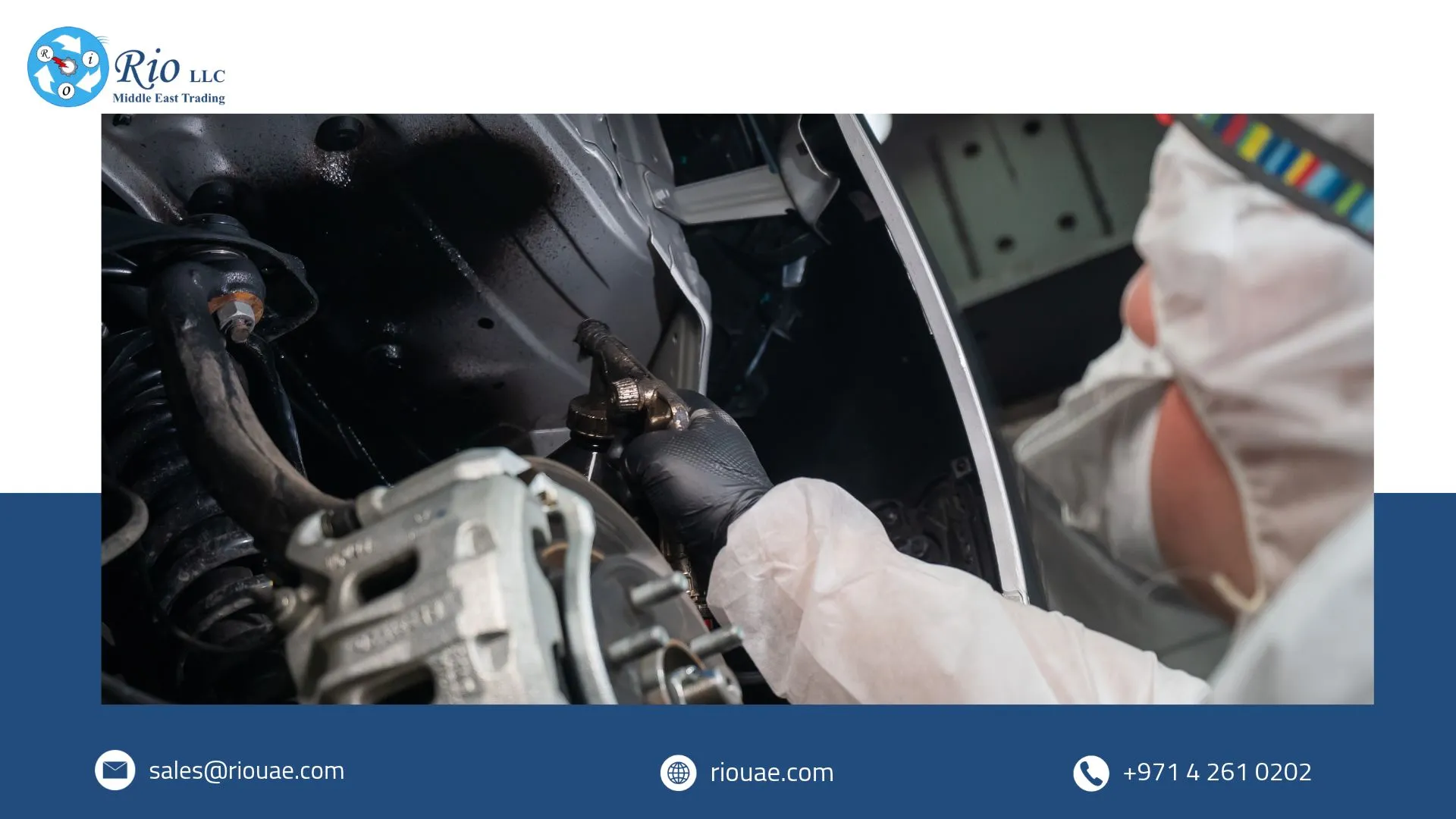
The starting condition of the surface matters. A preservation task may specify cleaning, drying, inspection or restoration of another finish before a protective compound is used. Those requirements should be established before material is issued.
Adding a protective product does not confirm that underlying corrosion has been removed or that the component is serviceable. If damage or an unusual condition is found, it needs assessment under the relevant maintenance process.
RIO’s surface preparation category covers cleaning and other preparation product families. For an overview of how cleaning tasks are organized, the aircraft cleaning process guide provides additional context.
The practical planning point is to make readiness explicit: identify who confirms the surface is ready and which task follows. This reduces uncertainty between preparation and preservation teams.
Aircraft Maintenance Safety When Using Protective Materials
Aircraft maintenance safety includes protecting personnel and controlling where chemical products are used. Review the current Safety Data Sheet for handling, ventilation, personal protection, storage and emergency information relevant to the named product.
The aircraft instructions identify application boundaries and any areas requiring protection from the material. Product delivery must also be controlled: an aerosol, brush application and other methods should not be treated as equivalent without supporting instructions.
Where applicable, the task should identify exclusion areas and checks needed before completion. Personnel should raise uncertainties about adjacent equipment, access or product migration before proceeding.
For general background, consult the FAA’s Corrosion Control for Aircraft guidance, AC 43-4B. The advisory discusses preservation and corrosion-control practices, while applicable manufacturer information takes precedence. It does not provide blanket authorization to apply a particular product throughout an aircraft. www.faa.gov
Managing the Protective Film After Application
Aircraft corrosion protection continues after a preservation task is completed. The organization needs a clear way to identify what has been applied, what condition is expected and which instructions govern subsequent checks.
A useful handover can reference the product, task, treated location and next required action. If later cleaning or maintenance affects the protective system, the responsible team should review the restoration requirement using the relevant data.
Avoid creating a renewal interval from a marketing statement or another operator’s experience. Product documents and maintenance instructions define the requirements applicable to the task. Where those requirements are unclear, the technical authority should resolve them.
Similarly, a visible film is not proof that all protection requirements have been met. Acceptance depends on the specified checks and records, not appearance alone.
Plan for Removal Before the Next Operation
Temporary corrosion inhibitors introduce a practical question: what happens when the component moves to its next stage? A preservation plan should identify any removal, cleaning or inspection requirements before painting, bonding, testing or installation.
This is especially relevant when workshop teams share responsibility for the component. The receiving team needs to know its preservation status rather than discovering an unidentified film during preparation.
Useful handover information includes:
- The protective material and applicable task reference.
- The component areas covered by the work.
- Any status labels or associated maintenance records.
- The next operation and its preparation requirements.
- Any unresolved condition requiring technical review.
Planning the transition supports aircraft maintenance safety and helps keep preservation records connected to the component’s maintenance history.
Common Misunderstandings About Corrosion Inhibitors
“More product means more protection.” Application requirements are product- and task-specific. Additional material is not evidence of compliance with the required process.
“A corrosion inhibitor repairs existing damage.” Protective compounds do not replace damage assessment or approved repair actions.
“Water displacement means preparation is unnecessary.” A product characteristic does not cancel the preparation requirements in the maintenance instructions.
“Temporary protection can remain through every later process.” Confirm the requirements for removal or retention before the next task.
“A listed approval covers every location.” Verify the exact product reference, approval scope and aircraft application.
Discussing these assumptions during work planning helps teams ask more precise questions about aircraft corrosion protection. It also keeps product selection tied to the component requirement.
Information to Prepare for a Product Enquiry
Once the technical requirement has been established, a concise enquiry helps procurement and supply teams identify the requested item. Include the exact product name or manufacturer reference, required quantity, packaging and delivery destination.
State which documents are needed, such as a Technical Data Sheet, Safety Data Sheet or available conformity documentation. If an alternative is being considered, flag that it requires technical review rather than presenting it as an accepted substitute.
RIO Middle East lists protective materials within its surface protection range. Availability, documentation and commercial details should be confirmed for the requested reference and destination.
Frequently Asked Questions
What is the purpose of aircraft corrosion protection?
Its purpose is to help maintain specified protection of susceptible materials during operation, maintenance or storage. The measures required depend on the aircraft or component instructions and the condition of the item.
Are all corrosion inhibitors water-displacing?
No. Water displacement is a characteristic of some products. Check the exact technical documentation rather than assuming that every corrosion-inhibiting compound performs this function.
Can temporary protection replace an aircraft coating system?
Only use the system specified for the task. A temporary protective film and a primer or topcoat system have different roles, so one should not be substituted for the other without the required authorization.
How does preservation support aircraft maintenance safety?
Clear material selection, application boundaries, documentation and handovers help personnel understand the component’s protection status. These measures support the maintenance process alongside the required inspection and technical assessment.
How long does protection last?
There is no universal duration. The product, exposure and maintenance instructions determine the applicable preservation and review requirements. A general product description cannot establish an inspection or reapplication interval for an aircraft.
Keep Protection Connected to the Maintenance Plan
Effective aircraft corrosion protection requires clarity about the component’s condition, the specified protective material and the next maintenance stage. Corrosion inhibitors are useful within defined applications, supported by compatible preparation, appropriate checks and complete handovers.
For relevant product families, explore RIO Middle East’s anticorrosion protection and coatings categories through the links above. Prepare the required reference, application details and documentation needs before requesting information. This helps connect the sourcing decision with the aircraft maintenance safety requirements governing the actual work.