Why Dubai Is a Hub for Aerospace and Aviation Companies

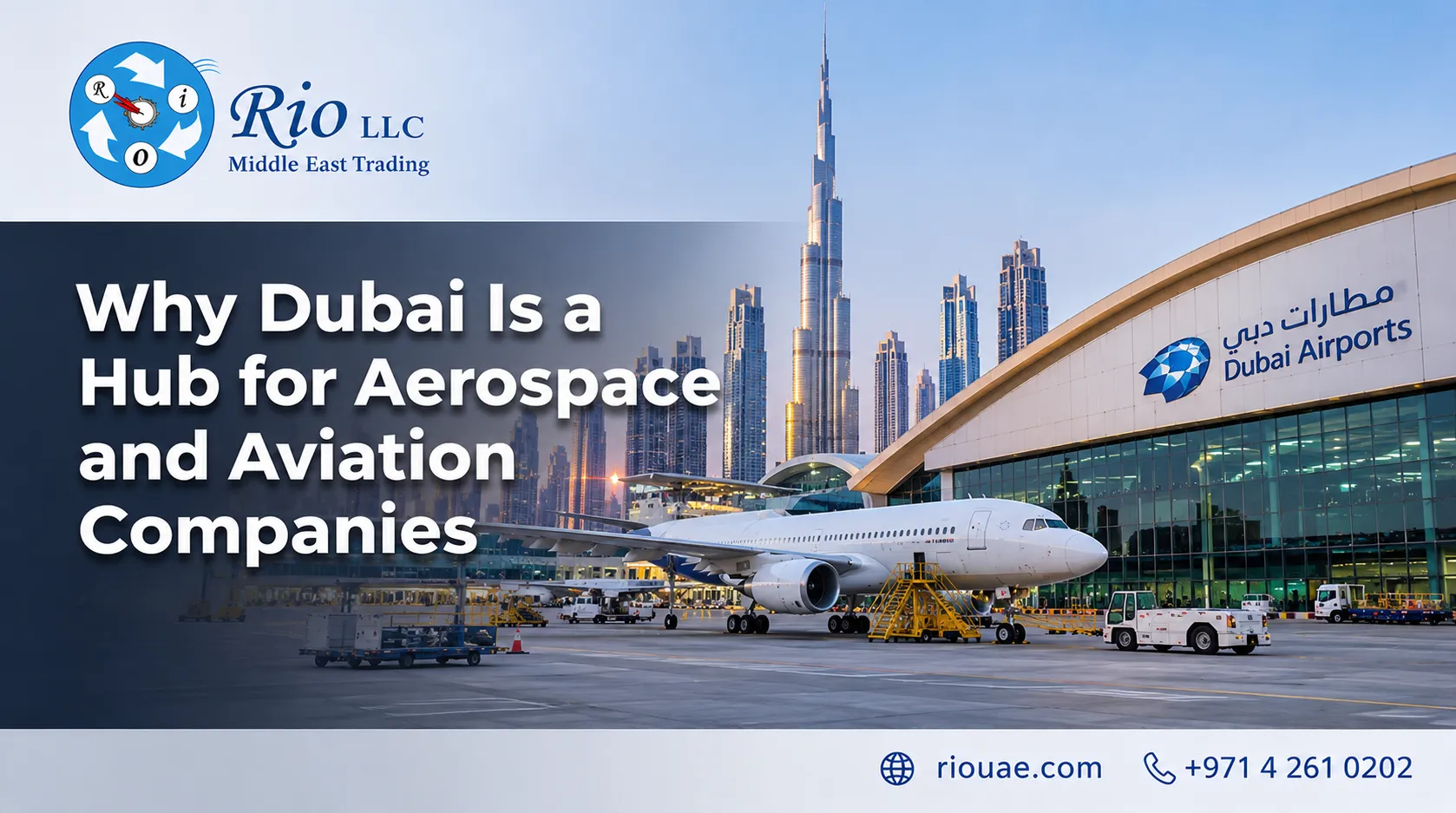
Dubai’s aviation reputation starts with its airports, but its role extends into engineering, maintenance, specialist supply and logistics. The Dubai aerospace industry brings these activities into a business environment where aircraft operators, workshops, distributors and service organizations can work within a connected regional network.
The attraction is the combination of capabilities. A maintenance organization needs more than an airport nearby: it needs personnel, technical information, suitable facilities and access to the specified parts and materials. A supplier needs customers and workable delivery arrangements. An aviation business needs a location that supports its actual operating model.
This article explains why Dubai attracts different types of aviation organizations and what makes the surrounding ecosystem useful. It also considers the aviation companies Dubai hosts and the aerospace suppliers Dubai businesses rely on, while distinguishing existing capabilities from future development plans.
What Makes an Aerospace Hub?
An aerospace hub is a concentration of connected aviation and technical activities. Airports provide an operating platform, while airlines, maintenance organizations, logistics businesses, training institutions and suppliers contribute other capabilities.
The value comes from how these organizations interact. An aircraft component might move between an operator, a specialist workshop and a supply channel. Different teams handle the technical decision, physical movement and commercial arrangements.
The Dubai aerospace industry should therefore be understood as an ecosystem rather than a single market category. Passenger activity, maintenance capacity and product distribution measure different aspects of that ecosystem. A large traffic figure does not establish the size of every supporting market or guarantee demand for a particular business.
1. International Connectivity Creates a Meeting Point
Dubai’s airports give aviation businesses a physical connection with international operations. Dubai Airports manages both Dubai International, or DXB, and Dubai World Central–Al Maktoum International, or DWC. Their roles combine existing airport activity with long-term infrastructure development.
Dubai Airports reported 95.2 million passengers at DXB in 2025. However, the operating picture is not a story of uninterrupted growth: its November 2026 update reported 50.4 million passengers for the first nine months of 2026, down 28.1% year on year following disruptions earlier in the year. media.dubaiairports.ae
Both figures need their dates and context. They describe passenger activity, not a valuation of the Dubai aerospace industry. The broader point is that Dubai has an established international aviation platform, while traffic and business conditions can change.
For technical businesses, connectivity is useful when it supports the movement of people, components or materials required by their customers. The benefit depends on the actual routes, permissions and delivery arrangements involved.
2. Dedicated Aerospace Areas Bring Businesses Together
Specialized infrastructure helps explain why aviation activity extends beyond the airport terminal. Mohammed Bin Rashid Aerospace Hub, or MBRAH, is Dubai South’s aerospace platform, with facilities and development aimed at aviation businesses and associated industries.
Dubai South describes the hub as including maintenance centres and training and education campuses. It also reports an expansion of the Aerospace Supply Chain zone through a new Suppliers Complex intended to provide space for maintenance providers, parts traders and aerospace businesses.
The published plan describes 88 leasable units, with completion expected by the end of 2026. That timing is a stated development expectation, rather than confirmation that the new building is already operational. Readers can review Dubai South’s announcement about the Suppliers Complex for the project description. dubaisouth.ae
For an individual company, proximity is one consideration among several. The premises still need to fit the intended work, storage conditions and operating requirements.
3. Logistics Connects Aviation With Regional Trade
The Dubai aerospace industry also benefits from a wider logistics setting. Jafza describes the Dubai Logistics Corridor as connecting Jebel Ali Port, the free zone and Al Maktoum International Airport through sea, land and air infrastructure. jafza.ae
This offers a framework for businesses that need different transport modes. A routine stock shipment, an urgent component movement and a chemical consignment may require different arrangements even when they share a destination.
The practical benefit is the ability to assess suitable routes, rather than an automatic promise of immediate delivery. Product classification, documentation, customs arrangements and handling requirements can affect the available option.
The aerospace suppliers Dubai maintenance teams work with need to translate that infrastructure into a clear shipment proposal. A location can support logistics, but the particular order still needs confirmed product identification, packaging, destination and delivery terms.
4. Engineering Investment Supports a Technical Role
Maintenance, repair and overhaul is another reason Dubai functions as an aviation hub. Aircraft operators need technical support throughout the life of their fleets, and that work can involve aircraft facilities, component workshops and specialist service providers.
Emirates’ May 2026 announcement about a US$5.1 billion engineering complex at Dubai South illustrates the scale of planned investment. The announcement described a hangar complex designed for 28 wide-body aircraft simultaneously and construction expected to finish around the middle of 2030. emirates.com
Those figures describe a development project. They should not be counted as current operating capacity. Completion, commissioning and the scope of services are separate milestones.
The investment direction nevertheless helps explain Dubai’s technical ambitions. Potential supporting requirements can include equipment, inspection, consumables and logistics, subject to actual purchasing plans and supplier qualification.
RIO’s article on aerospace maintenance chemicals explains how one group of materials supports maintenance processes. It provides technical context rather than a forecast of orders associated with any project.
5. Specialist Suppliers Support Defined Workshop Needs
Airlines and workshops use many different products, and a supplier’s role depends on what it actually handles. A distributor of technical chemicals has a different capability from an aircraft-parts business or a maintenance-equipment provider.
The aerospace suppliers Dubai organizations approach may support:
- Cleaning and surface preparation requirements.
- Inspection-related materials and consumables.
- Specified coatings and associated system products.
- Protection or preservation materials.
- Parts, equipment or other technical categories within their own portfolios.
These categories are examples of different supply roles, not a claim that every supplier offers them all. Technical acceptance depends on the product and maintenance requirement.
RIO’s surface preparation category and non-destructive testing category illustrate separate product families. Their presence in a local catalogue can help identify a reference, while stock, documents and delivery still require confirmation for the enquiry.
6. Aviation Education Adds to the Ecosystem
An aviation location needs people with different forms of expertise: engineering knowledge, practical maintenance skills, operational understanding and commercial coordination. Education and training institutions contribute to that wider capability.
Emirates Aviation University, located in Dubai International Academic City, lists programmes in aerospace and aeronautical engineering, aircraft maintenance engineering and air transport management. These offerings illustrate education paths associated with the aviation environment. STARTS HERE
A qualification and an authorization to perform a maintenance task are different matters. Employers and individuals must establish the training, experience and authorizations appropriate to the work involved.
For businesses considering the Dubai aerospace industry, workforce planning should identify the actual skill requirements. A technical sales role, an inspection role and a maintenance-certification role cannot be treated as interchangeable simply because all relate to aviation.

How Different Organizations Use the Same Hub
The aviation companies Dubai attracts participate in different parts of the aircraft lifecycle. A useful way to understand the ecosystem is to map the function each organization performs.
| Organization type | Main role | Typical connection with other businesses |
| Aircraft operator | Operates aircraft under its applicable arrangements | Coordinates maintenance and operational support |
| Maintenance organization | Performs work within its authorized scope | Uses technical data, materials and specialist services |
| Product distributor | Supplies identified products and documentation | Works with manufacturers, buyers and logistics providers |
| Logistics provider | Coordinates physical movement | Connects dispatch locations with receiving facilities |
| Training institution | Provides defined education or training | Supports skills development for relevant roles |
Some businesses combine activities, but each capability needs to be assessed separately. Being based in the same city does not make all organizations part of one approval, stock network or maintenance service.
Why Local Presence Can Help Technical Coordination
A local business presence can make communication and coordination more practical when it matches the customer’s needs. Buyers may be able to discuss a reference, clarify packaging or route a documentation request through a relevant contact.
That advantage should be described accurately. A Dubai address does not confirm local stock of every listed product, same-day delivery or approval for a particular application. Those details belong to the actual quotation and technical review.
For aerospace suppliers Dubai customers evaluate, useful support means clearly identifying what is confirmed and what remains subject to review. This can include product reference, document availability, quantity and destination.
RIO’s UAE aerospace chemical supply information explains its Dubai-based enquiry process. The page serves product sourcing needs, while this article explains the wider location and industry context.
A Practical Example of the Ecosystem at Work
Consider an illustrative workshop task that requires a specified cleaning material before inspection. The maintenance team establishes the relevant reference and process. Procurement checks the required quantity, packaging and documentation with a supplier. Logistics and receiving personnel then coordinate the delivery and acceptance arrangements.
The value of the surrounding ecosystem is the availability of organizations that can handle these separate responsibilities. The technical decision remains with the responsible maintenance organization; the supplier and logistics provider fulfil their own roles.
For a finishing task, the material requirement might instead involve the specified coating system. RIO’s coatings category provides product-discovery context for that different requirement.
This example shows how the Dubai aerospace industry functions through connected work, rather than through airport scale alone.
Current Operations and Future Projects Need Separate Assessment
Dubai’s aviation story includes both existing infrastructure and significant future plans. Businesses should distinguish between what is operating, what is under construction and what remains a longer-term development target.
For a practical assessment, ask:
- Is the facility already performing the relevant activity?
- Does the announcement describe construction, commissioning or operations?
- What completion date was stated, and has it changed?
- Is there an identified customer requirement or only a general market opportunity?
- Which qualifications or capabilities would participation require?
This approach makes project news more useful. A new facility may indicate future activity without establishing an immediate contract or an accessible market for every supplier.
It also helps prevent a city’s industrial ambitions from being presented as guaranteed results for an individual business.
Challenges Behind the Hub Advantage
Connectivity and infrastructure do not remove the demands of aerospace work. Organizations still need relevant capabilities, current technical information and arrangements that meet customer and regulatory requirements.
Commercial conditions matter as well. Freight routes, demand, competition and project schedules can change. The latest airport figures are one reminder that a mature hub can experience disruption while retaining its longer-term infrastructure strengths.
The aviation companies Dubai supports therefore need to connect their location decision with a realistic operating plan. Useful questions concern the actual customer, work scope, personnel, facilities and supply requirements.
For a supplier, that may mean focusing on a defined material portfolio and delivery route. For a workshop, it may mean identifying a particular aircraft or component capability. A broad aviation label is only the beginning of the assessment.
Where RIO Middle East Fits Into Dubai’s Aerospace Network
RIO Middle East is a Dubai-based supplier of listed aerospace chemicals and technical materials. Its role concerns product enquiries and supply support for surface preparation, treatment, protection, coatings and inspection requirements. Trusted Solutions
For protection-related needs, its surface protection range offers relevant product families. Buyers should identify the intended process and required reference, then state packaging, quantity, documentation needs and destination.
RIO’s catalogue does not represent every product or service used in aviation. Its contribution sits within the specialist supply layer of the Dubai aerospace industry, with suitability and commercial details reviewed for the actual enquiry.
This distinction helps buyers identify the right kind of contact without confusing product distribution with aircraft maintenance or regulatory authorization.
Frequently Asked Questions
Why is Dubai considered an aerospace and aviation hub?
Dubai combines international airport activity, dedicated aerospace infrastructure, logistics connections, maintenance investment, specialist suppliers and aviation education. These capabilities support different parts of the aviation ecosystem.
What types of aviation companies operate in Dubai?
The ecosystem includes aircraft operators, maintenance organizations, technical suppliers, logistics providers and education or training businesses. Each has its own capabilities and operating requirements.
Are all aerospace suppliers Dubai-based buyers find the same?
No. Product portfolios, manufacturer relationships, documentation support and delivery arrangements vary. Buyers need to assess the specific requirement rather than assume that every supplier offers equivalent support.
Does proximity to an airport guarantee fast delivery?
No. Timing depends on the item, availability, route, documentation, handling and agreed delivery arrangements. Confirm these details for the specific order.
How does Dubai’s role differ from the wider UAE aerospace industry?
Dubai has a particular concentration of airport operations, logistics, maintenance development and technical supply. The wider UAE ecosystem includes additional industrial, research and manufacturing capabilities in other emirates.
A Hub Built on Connected Capabilities
The Dubai aerospace industry is best understood through the relationship between airports, engineering activity, logistics, people and specialist supply. Its appeal comes from combining these functions in a location with established international aviation connections.
For organizations exploring the ecosystem, the next step is to identify a specific customer requirement and the capability needed to meet it. For aerospace chemical and technical-material enquiries, RIO Middle East provides a Dubai-based route to product information and RFQ review linked to the actual maintenance or manufacturing task.