
What Is Liquid Penetrant Testing in Aviation?

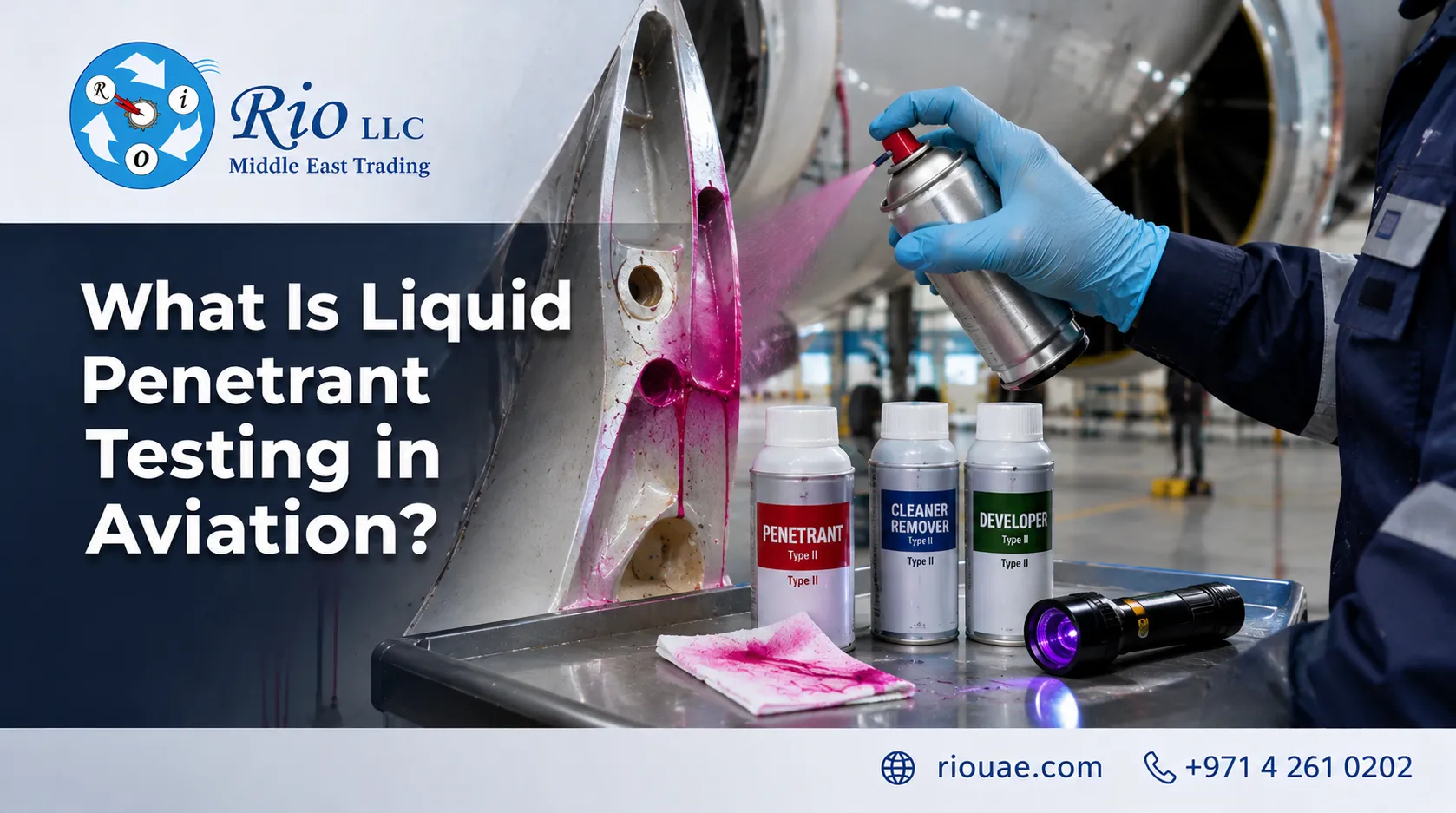
A surface crack can be difficult to see during an ordinary visual examination. Liquid penetrant testing in aviation helps make certain surface-breaking discontinuities more visible by using a penetrant liquid and a controlled inspection process. It is one method within non-destructive testing, commonly shortened to NDT.
The method is relevant when the component, surface condition and maintenance instructions permit it. It does not reveal every type of damage, and a visible indication does not automatically establish whether a part is acceptable. Qualified personnel interpret the result against the applicable criteria.
This guide explains how aircraft penetrant inspection works, what fluorescent inspection means and why penetrant testing consumables belong to a specified system. It provides an introduction for maintenance teams, procurement staff and readers exploring aerospace NDT materials. The actual inspection must follow the component’s applicable procedure and organizational requirements.
How Does Liquid Penetrant Testing Work?
The principle is capillary action: a suitable liquid can enter accessible openings at a surface. In penetrant inspection, the process makes liquid retained in those openings visible as an indication after the required processing stages.
A developer commonly helps bring retained penetrant back toward the surface and makes the indication easier to observe. The inspector then examines the processed area under the conditions specified for the selected system. Liquid Penetrant Inspection
This is different from simply spraying coloured liquid onto a component and checking for marks. The result depends on preparation, material selection, process control, viewing conditions and interpretation.
Readers can browse RIO’s non-destructive testing materials for product-family context. The presence of an item in an NDT catalogue does not establish its suitability for a particular aircraft component.
What Can the Method Detect?
Liquid penetrant testing in aviation is used to reveal discontinuities that are open to the inspected surface. Depending on the part and procedure, these can include surface-breaking cracks or other relevant openings.
The surface must be suitable for the method. Non-porous materials are the general application area; porous or excessively rough surfaces can produce background that makes interpretation difficult. Material compatibility also needs to be established.
The FAA’s Aviation Maintenance Technician Handbook—Powerplant, Volume 2 provides an introduction to dye penetrant inspection and its surface-opening principle. It is background material, rather than an aircraft-specific inspection instruction. faa.gov
A useful distinction is that the method reveals an indication associated with a surface opening. It does not, by itself, determine the full depth of a crack or the remaining strength of the component.
What Liquid Penetrant Testing Cannot Confirm
Aircraft penetrant inspection has important limits. A discontinuity that does not open to the inspected surface is outside the method’s basic detection principle. Coatings, contamination or other material covering an opening can also interfere with the intended examination.
The method should not be treated as a universal check for internal damage, composite delamination or every corrosion condition. Different questions can require different inspection methods under the relevant technical instructions.
Similarly, a result with no relevant indication is meaningful only within the scope and limitations of the completed inspection. It does not establish that the entire component is free from every possible defect.
For maintenance planning, identify exactly what the inspection is intended to assess. That question comes before choosing a penetrant product or comparing suppliers.
Visible and Fluorescent Penetrant Inspection
Penetrants are commonly described by how their indications are viewed. Visible penetrants produce colour contrast under suitable white-light conditions. Fluorescent penetrants produce fluorescence under specified ultraviolet viewing conditions, typically UV-A, with controlled ambient light.
| Feature | Visible penetrant | Fluorescent penetrant |
| Observation principle | Colour contrast | Fluorescence under the specified UV-A conditions |
| Common identification | Type II | Type I |
| Viewing requirements | Defined white-light conditions | Defined UV-A and ambient-light conditions |
| Aerospace selection | Only as permitted by applicable instructions and restrictions | As specified by the applicable procedure |
These are different systems, not alternatives to select solely by convenience. FAA guidance specifically cautions against Type II visible dye for final acceptance of aerospace products and against using it before Type I fluorescent inspection of the same surface. Prior visible-dye use can interfere with a later fluorescent examination. faa.gov
Consequently, a generic visible-dye kit should not be assumed appropriate for aircraft acceptance work. The actual method and products must come from the applicable inspection requirements.
Fluorescent Penetrant Testing Aircraft Workshops Perform
The fluorescent penetrant testing aircraft workshops perform may use a dedicated processing line or another arrangement permitted by the relevant procedure. The setup depends on the component, inspection scope and organizational capability.
Fluorescent inspection needs suitable viewing conditions and the required equipment checks. A lamp alone does not create a complete inspection capability. The responsible organization must also control the process and ensure personnel are qualified for their assigned duties.
Different penetrants can have different sensitivity classifications. A higher classification is not an automatic upgrade for every component. Selection depends on the specified system, surface and inspection requirement.
The practical question is which type, method, sensitivity and associated materials the procedure requires. Describing an item only as “fluorescent penetrant” leaves several important selection details unanswered.
Type, Removal Method and Sensitivity Are Different Details
Product descriptions can contain several classifications that address different characteristics. Understanding them helps prevent incomplete material requests.
- Type identifies the visible or fluorescent category.
- Removal method identifies how excess surface penetrant is processed within the system.
- Sensitivity level describes a classification associated with the penetrant’s detection capability under defined conditions.
- Developer form identifies a separate material category used as specified by the procedure.
For example, water-washable and post-emulsifiable systems do not use identical removal arrangements. Post-emulsifiable methods involve a specified emulsifier stage; an emulsifier is not a universal addition to every inspection. magnaflux.com
When discussing liquid penetrant testing in aviation, retain the complete system identification. A matching sensitivity level alone does not establish that another product can be substituted.

The Main Penetrant Testing Consumables
Penetrant testing consumables can perform several functions within an inspection system. Their exact combination depends on the method.
Cleaning materials
Preparation products address the contamination identified by the process. Their compatibility with the component and inspection requirements needs to be confirmed.
Penetrant
The penetrant provides the liquid used to enter accessible surface openings. Its type, removal method and sensitivity must match the specified requirement.
Remover or emulsifier
These products have method-specific roles in managing excess penetrant. They should not be treated as interchangeable cleaners or chosen independently of the inspection system.
Developer
The developer helps make retained penetrant visible as an indication. The required form and use depend on the system instructions.
RIO’s penetrant testing category groups relevant listings. Check each product’s documentation and procedure compatibility rather than assembling a system from unrelated catalogue descriptions.
Why Surface Condition Matters
An opening must be accessible to the penetrant for the method to work as intended. Oil, grease, residual chemicals or other contamination can interfere. Surface roughness can also increase background and complicate interpretation. Liquid Penetrant Inspection
Preparation is therefore part of aircraft penetrant inspection, with its method determined by the applicable technical instructions. Uncontrolled abrasion or other surface work can change the condition being inspected; it should not be improvised to make a part look cleaner.
For general context, RIO’s aircraft cleaning process guide discusses planning and material suitability. Its cleaning overview does not replace the preparation requirements in an NDT procedure.
If coating removal, additional access or further preparation is needed, that requirement should be resolved through the responsible maintenance and inspection process before examination.
An Overview of the Inspection Sequence
The following describes the purpose of the stages, not an operating procedure. Exact order, timing, temperatures and other parameters depend on the approved instructions and selected method.
- Confirm the requirement: identify the component, area, inspection method and acceptance criteria.
- Prepare the surface: establish the condition required for the specified examination.
- Process with the penetrant system: use the identified materials and method-controlled stages.
- Examine the area: apply the required viewing conditions and inspection technique.
- Evaluate and record indications: assess the observations against the applicable criteria.
- Complete follow-up: carry out required post-cleaning, protection, reporting or further action.
This sequence explains why purchasing penetrant testing consumables is only one part of readiness. Personnel, equipment, instructions and the component’s prepared condition must also be appropriate.
An Indication Is Not Automatically a Rejectable Defect
An indication is the visible evidence the inspector observes. Its cause and significance need to be evaluated. Some indications may relate to a relevant discontinuity, while others may arise from geometry, surface condition or processing effects.
Acceptance depends on the applicable criteria. A small mark cannot be judged acceptable or unacceptable solely from a general description, and indication size should not be assumed to equal crack depth. magnaflux.com
Qualified interpretation is central to liquid penetrant testing in aviation. If an indication requires additional evaluation, that decision belongs within the organization’s technical and inspection arrangements.
A procurement team can provide the correct aerospace NDT materials, but it cannot establish component serviceability from a product’s sensitivity rating or sales description.
Why Personnel Qualification Matters
Aircraft penetrant inspection requires personnel with the knowledge and authorization appropriate to their roles. Process execution, interpretation and technical oversight may involve different responsibilities under the organization’s qualification system.
FAA guidance on NDI personnel addresses experience, training, examination and certification arrangements. The applicable organizational and regulatory requirements determine how those principles apply to a particular facility. faa.gov
This distinction matters for workshop planning. Having materials and equipment available does not mean a team can undertake every inspection task. The organization also needs an appropriate scope, current instructions and qualified personnel.
For the fluorescent penetrant testing aircraft facilities carry out, viewing conditions and process checks are part of that technical capability, rather than optional additions to a chemical purchase.
How the Method Compares With Other NDT Techniques
NDT methods answer different inspection questions. Liquid penetrant inspection relies on accessible surface openings. Magnetic particle inspection requires suitable ferromagnetic material and magnetization. Ultrasonic, eddy-current and radiographic methods have their own capabilities and limitations.
It is not useful to rank one method as universally best. The component, suspected condition, access and technical requirements determine the appropriate method or combination.
RIO’s broader NDT category includes separate families for penetrant testing, magnetic testing and replication. These aerospace NDT materials serve different functions. A replication compound, for example, should not be assumed to perform the same task as a liquid penetrant system.
The selection should start with the inspection requirement, followed by the equipment and materials specified to carry it out.
Keeping Consumables Identifiable and Suitable for Use
Inspection readiness includes knowing what material is available and whether its status permits use. Follow the applicable controls for product identification, batch records, storage, shelf life and any in-service checks.
Avoid assuming that an unopened container is acceptable without checking its identity and relevant limits. Materials already in a processing system can also require checks specified by the procedure.
Manufacturer documents explain product characteristics, while the inspection procedure establishes the system requirements. Neither should be replaced by a general catalogue label such as “aerospace approved.”
For chemical-documentation context, RIO’s article on aircraft cleaning chemicals explains the distinction between intended use, compatibility and supporting information.
What to Include in an NDT Material Enquiry
A clear enquiry for aerospace NDT materials identifies the full requirement rather than requesting a generic inspection kit. Include:
- Manufacturer and exact product reference, when known.
- Required penetrant type, removal method and sensitivity.
- Associated developer, remover or emulsifier references.
- Quantity, packaging and destination.
- Required technical, safety and conformity documentation.
If identification is incomplete, flag the need for technical confirmation. A supplier can provide product information; the maintenance organization confirms acceptance for the task.
As a catalogue example, RIO lists HM604 fluorescent penetrant with type, method and sensitivity information. That listing illustrates the level of product identification to review, not a recommendation for every aircraft application. SOCOMORE Solutions
Frequently Asked Questions
What is liquid penetrant testing in aviation used for?
It helps reveal certain surface-breaking discontinuities on suitable non-porous components. The applicable procedure determines the part, inspection area, materials and acceptance criteria.
Can aircraft penetrant inspection detect internal cracks?
Not when they have no opening to the inspected surface. Internal conditions may require a different method specified by the relevant technical data.
Is fluorescent inspection interchangeable with visible dye inspection?
No. Different systems and aerospace restrictions apply. Do not substitute visible dye for a specified fluorescent inspection or assume prior visible-dye use will not affect later testing.
What penetrant testing consumables are needed?
The method can involve specified cleaning materials, penetrant, remover or emulsifier and developer. The required combination comes from the inspection procedure.
Does an indication mean a component must be rejected?
Not automatically. Qualified personnel evaluate its cause and significance against the applicable acceptance criteria and determine the required action.
Understand the Method Before Choosing Materials
Liquid penetrant testing in aviation depends on an appropriate component surface, a defined process and qualified interpretation. Its strength is revealing accessible surface discontinuities; its limitations must remain part of every inspection decision.
For material enquiries, RIO Middle East provides product listings and RFQ support for relevant inspection consumables. Identify the specified system and provide the product references, packaging, quantity and documentation needs so the enquiry can be reviewed against the actual requirement.