
Essential Materials Used in Aircraft Maintenance Facilities

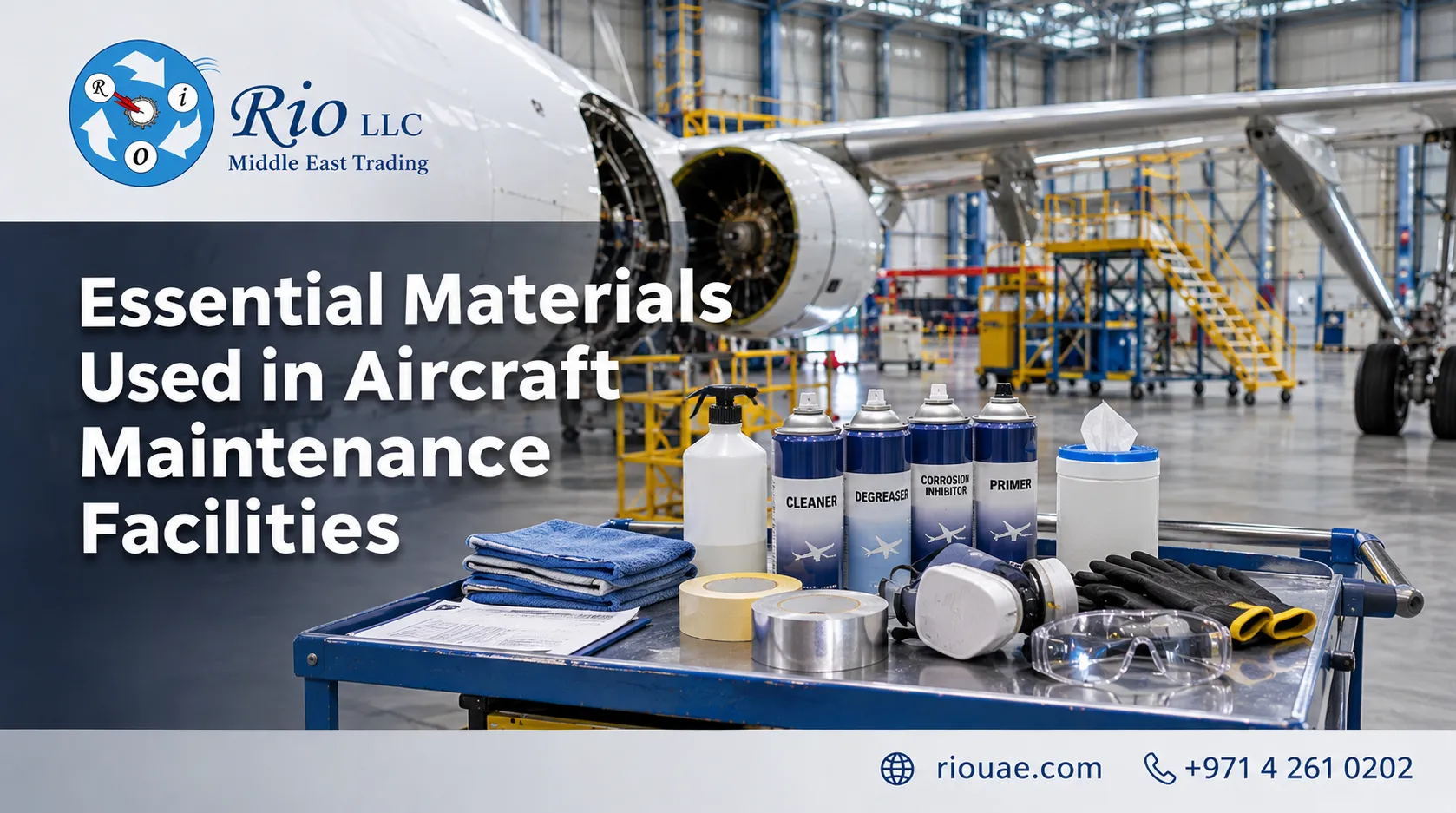
A maintenance facility can have a component ready for work, qualified personnel available and the correct tools on hand, yet still need a small consumable before the task can begin. A specified wipe, inspection material, sealant or protective compound can be as necessary to that operation as a replacement part. Aircraft maintenance materials connect the work instructions with what technicians actually use at the bench or aircraft.
The material list varies with the facility’s approved work and technical capability. A component inspection workshop, a paint facility and a general maintenance hangar will not require identical stock. Each needs the materials specified for its own tasks, together with suitable identification and control.
This guide explains the main groups of MRO materials found across maintenance environments and how they fit into everyday work. It also looks at preparing aviation consumables for specific jobs, keeping stock identifiable and managing material status through the workshop.
What Are Aircraft Maintenance Materials?
Aircraft maintenance materials is a broad practical term for the substances and supplies used when performing maintenance. It can include technical consumables, raw materials, finishing products and selected items associated with repair or preservation.
The term does not replace the classifications used in technical documents or organizational procedures. A reusable tool, a replacement component and a consumable material require different identification and control arrangements.
For example, a dispenser is equipment, while the compound loaded into it is material. A replacement hydraulic unit is a component, while a specified cleaning product used during its maintenance is a consumable. Keeping those distinctions clear helps planners build a complete work package.
The following examples describe material families across the industry. They are not a universal stock list or a claim that every facility needs every item.
A Quick Map of Materials by Workshop Activity
| Workshop activity | Examples of associated material families |
| Cleaning and preparation | Cleaners, technical wipes and specified abrasives |
| Assembly and repair | Adhesives, sealants and specified shimming materials |
| Inspection | Penetrants, developers, magnetic inspection media and replication compounds |
| Finishing | Primers, topcoats and associated system materials |
| Servicing | Specified lubricants and technical fluids |
| Preservation and movement | Protective compounds and task-appropriate packaging supplies |
The maintenance instructions establish which reference is required. A category description helps organize MRO materials, but it cannot determine suitability for a particular aircraft task.
1. Cleaning Products and Technical Wipes
Cleaning materials support tasks ranging from removing workshop contamination to preparing a surface for a later process. Their role depends on the component material, contamination and operation that follows.
Technical wipes deserve attention alongside the cleaning liquid. Where a task specifies a particular wipe, its characteristics form part of the material requirement. Manufacturer information for some pre-saturated aerospace wipes identifies properties such as low linting, absorption and resistance to tearing. socomore.com
For planning, record whether the job calls for a liquid product with a separate wipe or an identified pre-saturated format. Do not assume these arrangements are automatically interchangeable.
RIO’s surface preparation category includes cleaning and related product families. Its article on aircraft cleaning chemicals explains why compatibility and intended use matter.
When preparing aviation consumables for a cleaning task, the useful question is whether the complete specified combination is available, rather than whether there is simply “some cleaner” in stores.
2. Abrasives, Masking and Application Supplies
Some preparation or finishing tasks call for specified abrasive materials, masking products or application supplies. These can be easy to overlook because they may be listed separately from the principal chemical or coating.
Abrasive type, masking requirements and application materials must follow the relevant process instructions. A general workshop pad or tape should not be assumed suitable for every aircraft finish or surface.
The planning benefit comes from identifying these supplies before the task starts. For example, a coating job can require more than the coating itself: the work package may identify preparation materials, masking and application accessories.
Group these requirements by task, with the exact reference or specification recorded where required. This approach makes aircraft maintenance materials easier to retrieve without encouraging substitutions based on appearance or convenience.
3. Adhesives, Sealants and Shimming Materials
Assembly and repair work may require adhesives, sealants or shimming materials with different functions. An adhesive supports a defined bonding process. A sealant addresses a specified sealing requirement. Shimming materials are used where the design or repair instructions call for them.
Product identity matters across these categories. A two-part material may need its associated components, and the process may specify additional preparation or application supplies. Planning should establish what constitutes the complete material set.
Shimming materials should also be distinguished from products used only to reproduce a surface for inspection. A replication compound is not automatically a structural or assembly material.
RIO has a Shims & Sealants category that provides a route to its listed products in that area. Use the applicable maintenance or repair data to determine the required reference, dimensions and handling conditions.
4. Inspection Consumables and Replication Materials
Inspection work can involve specialized aviation consumables as well as instruments and equipment. Depending on the method, these may include penetrants, developers, cleaning products or magnetic inspection media.
The inspection procedure determines the appropriate materials and their use. A product intended for one testing method should not be treated as suitable for another simply because both are described as NDT materials.
Replication compounds form another specialist group. Manufacturer information describes products designed to reproduce surface detail for engineering inspection. Their suitability depends on the specified inspection application and product characteristics. socomore.com
RIO’s non-destructive testing category includes product families for penetrant testing, magnetic testing and replication. For workshop planning, identify both the primary inspection material and any associated consumables required by the procedure.
This helps distinguish material readiness from equipment readiness. Having the inspection instrument available does not confirm that every specified consumable is ready for the job.
5. Surface Treatments and Coating Materials
Surface processing and finishing can involve several material families. A treatment product performs its defined surface function, while a primer or topcoat belongs to the specified coating system. These roles should remain visible in the work package.
A useful material list identifies the individual references, quantities and associated system components. It should not compress the entire requirement into a description such as “paint supplies.”
RIO lists surface treatment products separately from its coatings range. Those catalogue categories help users navigate by function; the applicable process determines which items are needed together.
For more detail on the stage before painting, read the article on aircraft surface preparation. Here, the materials-planning priority is to confirm that each required stage has its own identified supplies.
6. Lubricants and Technical Fluids
Servicing tasks may call for specific lubricants or technical fluids. Product selection depends on the applicable aircraft or component instructions, including any restrictions relevant to the system being serviced.
Avoid identifying these aircraft maintenance materials only by colour, viscosity description or a broad commercial category. The required reference or specification should guide identification and issue.
Planning can also account for the container or dispensing arrangement specified by the facility’s procedures. If material is transferred for use, its identity and any relevant status information need to remain clear under those procedures.
This category illustrates why a facility inventory needs more detail than the quantity on the shelf. The team must know which material it is, whether it is acceptable for the task and whether it has been stored and handled appropriately.
7. Preservation and Packaging Supplies
Maintenance does not always end with immediate installation. A component may move to another workshop, await further work or enter storage. The associated preservation instructions can introduce additional material requirements.
These may include a specified protective compound or packaging supplies appropriate to the item and storage arrangement. The relevant instructions determine the complete requirement; generic wrapping is not a substitute for a defined preservation system.
RIO’s surface protection category provides product listings associated with protection and preservation. Confirm the intended application and the next process before identifying a protective material for the work package.
Planning the final movement alongside the maintenance task helps keep preservation supplies from becoming a last-minute requirement. It also supports a clearer handover to the receiving team.

Building a Job Material List Instead of a General Shopping List
A facility can hold a substantial inventory and still lack the right material for a particular task. A job material list connects stock to the work instructions and makes missing items visible.
For each requirement, record:
- The task or work-package reference.
- The exact product designation, code or specification.
- Required quantity and unit of issue.
- Associated components or application supplies.
- Relevant storage, life or preparation conditions.
- Whether the material is available and acceptable for issue.
This is an illustrative planning approach, not a replacement for approved procedures. Its value is in separating “listed in inventory” from “ready for this job.”
MRO materials planning becomes more useful when it also identifies dependencies. An inspection finding may change the repair requirement, so some material needs can remain provisional until the technical review is complete.
Keeping Material Status Clear Through the Facility
Aircraft maintenance materials move through receiving, storage, issue, use and sometimes return. At each handover, staff need enough information to understand the item’s identity and status.
One practical approach is to identify what each stage must establish. Receiving checks the delivery against the organization’s acceptance requirements. Stores maintains the relevant identification and conditions. Personnel issuing material connect it with the task. Any return needs assessment under the facility’s procedures before it becomes available stock again.
For official background, the FAA’s Guide for Developing a Receiving Inspection System for Aircraft Parts and Materials, AC 20-154A, discusses receiving controls and traceability. It is advisory guidance and should be considered within the organization’s applicable regulatory framework. faa.gov
Shelf Life and Opened Containers
A material can require review even when the inventory system shows stock available. Check the relevant manufacturer limits and organizational procedures for expiry, storage and any conditions after opening.
Some aviation consumables have product-specific limits that change after a container is opened. Where applicable, that information needs to remain connected to the container and its use history. A purchase date alone cannot describe every relevant condition. www.socomore.com
For planning, match packaging to expected consumption and the work scope. Larger packs can be useful for repeated demand, while smaller packs may fit other requirements. The decision should reflect actual use and the product’s documented limits.
Do not infer that an expired or incorrectly stored material is acceptable because it looks normal. Refer the condition through the facility’s established process.
An Example of Material Readiness at the Workshop
Imagine a component arriving for a task involving cleaning, inspection and a possible finishing operation. The technician has the tools and instructions, but the material review identifies three separate decisions.
First, the cleaning product and wipe format need to match the procedure. Second, the inspection consumables need to be identified for the required method. Third, the finishing materials depend on the inspection outcome and technical decision.
Preparing every possible product without clarifying those stages can create unnecessary issue and uncertainty. A better planning question is which materials are confirmed now and which depend on a later finding.
This example shows how MRO materials support the workflow without replacing the decisions that define the maintenance scope.
Avoiding Common Material-Planning Gaps
Small omissions can complicate an otherwise prepared job. A useful review looks for:
- A multi-part product listed without all required components.
- A chemical identified without its specified application supplies.
- Quantities recorded in inconsistent units.
- An opened container whose status is unclear.
- Material available in stores but not yet accepted for issue.
- Preservation supplies omitted from the final handover plan.
These are planning prompts rather than universal findings. Facilities should adapt them to their work and procedures.
The objective is a complete and understandable material requirement. Counting containers alone does not establish readiness.
Where RIO Middle East Fits Into Material Enquiries
RIO Middle East accepts enquiries for listed aerospace chemicals and technical materials used in surface and inspection processes. Its catalogue can help purchasing and technical teams identify relevant product families.
For an enquiry, include the product reference, quantity, packaging, destination and required documentation. If the exact item is unknown, provide the specification or application details and identify the need for technical confirmation.
Availability and documentation are reviewed for the particular request. A facility’s material list may also include hardware, fluids, repair stock or equipment beyond the products listed by RIO; those requirements need their own appropriate sourcing arrangements.
Frequently Asked Questions
What are the main aircraft maintenance materials?
Examples include cleaning products, technical wipes, adhesives, sealants, shimming materials, inspection consumables, treatments, coatings, lubricants and preservation supplies. The required selection depends on the facility’s work scope and maintenance instructions.
What does MRO materials mean?
It is a practical term for materials supporting maintenance, repair and overhaul. The exact classification and controls depend on the item and the organization’s procedures.
Are aviation consumables interchangeable?
No. Similar descriptions do not establish equivalence. The applicable product reference, specification and technical acceptance process determine what may be used.
How are consumables different from tools?
Consumables are materials used or consumed in a task, while tools and equipment perform or support the work. A dispenser and the material it contains illustrate the distinction.
What should a facility check before issuing material?
Follow its approved procedures for identity, acceptance status, condition, life and any special handling requirements. Confirm that the item matches the task requirement.
Connect Every Material With Its Maintenance Task
Aircraft maintenance materials become useful when the correct reference, quantity and condition match the work being performed. Organizing them by task helps teams prepare cleaning, inspection, repair, finishing and preservation activities more clearly.
For relevant chemical and technical-material enquiries, browse RIO Middle East’s product categories linked above and provide the specified references with your request. A clear job material list helps connect technical planning, stores and purchasing before work reaches the bench.