
Aerospace Industry UAE: Growth and Opportunities

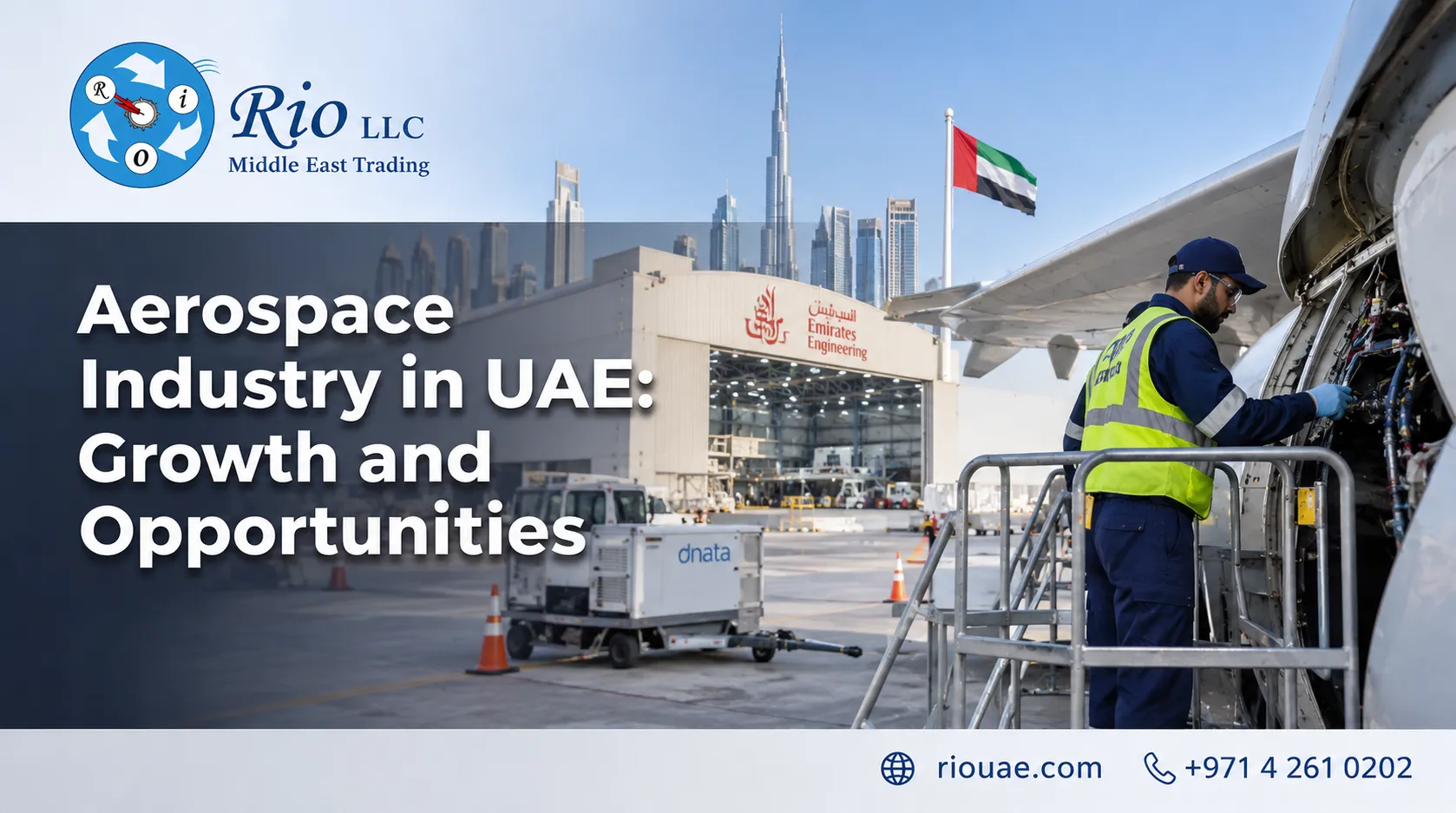
The UAE’s aerospace story extends beyond busy airports and international airlines. It includes aircraft manufacturing, maintenance facilities, specialist engineering, technical supply chains and space-related activity. For professionals researching aerospace industry UAE developments, the important question is how these activities connect and where practical opportunities are emerging.
A growing aviation network creates requirements beyond operating flights. Aircraft need technical support throughout their working lives, while manufacturers depend on qualified production processes and reliable supply networks. Training, inspection, logistics and specialist materials help connect those activities.
This guide explores the UAE aerospace market through its capabilities, growth drivers and business opportunities. It distinguishes operating capacity from projects still under development and considers what participation requires. The aim is to explain the industry landscape for readers, including businesses supporting the aviation sector UAE ecosystem through engineering, maintenance and technical supply.
Aerospace Industry UAE: Understanding the Full Ecosystem
The aerospace industry includes several connected activities, each with different customers and requirements. Commercial aviation is highly visible, but passenger traffic represents only one part of the picture.
| Industry area | Main activity | Examples of supporting requirements |
| Aircraft operations | Operating passenger, cargo and other flights | Maintenance planning, technical support and logistics |
| Aircraft maintenance | Inspecting, servicing, repairing and overhauling aircraft or components | Skilled personnel, approved processes and specified materials |
| Manufacturing | Producing aircraft structures, components or specialist materials | Controlled production, inspection and customer qualification |
| Technical supply | Providing products and materials for defined requirements | Identification, documentation and delivery coordination |
| Space-related activity | Developing space technologies, applications and capabilities | Research, engineering and specialist partnerships |
These activities contribute differently to the UAE aerospace market. A passenger total, manufacturing output figure and maintenance investment announcement measure different things. They should not be combined as if they describe one market value.
What Shows the Scale of UAE Aviation?
The General Civil Aviation Authority’s aviation statistics page reports 158 million passengers for 2025 and lists more than 50 MRO organizations. These figures illustrate the scale of aviation activity and the presence of a maintenance ecosystem. They are not a valuation of the entire aerospace manufacturing market. UAE Aviation Statistics
Readers can consult the GCAA’s UAE Aviation Statistics for the published indicators and their stated periods. Dates matter: a historical passenger figure should not be presented as a forecast or a current-year result.
The practical significance is the breadth of activity surrounding aircraft operations. Airlines, airports, maintenance organizations and industrial businesses create different types of technical demand. However, the size of aviation activity alone does not establish the accessible market for an individual supplier or service provider.
Why the Industry Is Developing
Aviation connectivity and technical infrastructure
The UAE’s role in international aviation provides a setting for technical services and industrial support. Aircraft operations and maintenance requirements connect with component movements, workshop activity and material sourcing.
The opportunity is not identical across every business. A component workshop needs different capabilities from a logistics provider or a chemical distributor. Understanding the actual customer and work scope is more useful than treating aviation growth as a general promise of demand.
Industrial diversification
The UAE’s industrial strategy emphasizes manufacturing, advanced technology, local industrial value and exports. Dubai Industrial Strategy 2030 also identifies aerospace among its priority subsectors. MoIAT
These policies provide context for industrial development. They should be distinguished from individual contracts, supplier qualifications or guaranteed commercial outcomes. A strategy can establish direction while each project still requires execution and technical acceptance.
International industrial relationships
Manufacturing partnerships show how local capability can connect with global aircraft programmes. Such relationships involve specific products, processes and customer requirements. They provide stronger evidence of industrial participation than a broad claim that a location is becoming an aerospace hub.
For businesses studying aerospace industry UAE opportunities, the relevant question is which capability they can demonstrate within those supply chains.
Manufacturing: An Established Part of the UAE Aerospace Market
Strata’s Al Ain operations provide a concrete manufacturing example. In a January 2026 announcement, the company reported producing 16,328 aircraft structural components during 2025, compared with 11,783 in 2024. It described output supporting aircraft platforms associated with manufacturers including Airbus, Boeing, Pilatus and Leonardo. Strata
This is company production information, rather than a countrywide growth rate. It shows that the UAE aerospace industry includes participation in aircraft structural supply chains, alongside its airline and airport activities.
Manufacturing also brings attention to the processes behind the finished component: material handling, production engineering, inspection and controlled surface work. Opportunities for supporting businesses depend on their ability to satisfy the relevant customer’s specifications and qualification requirements.
For background on one of those technical areas, RIO’s guide to aerospace surface treatment explains the role of surface-related processes. It does not establish eligibility to supply a particular manufacturer.
Maintenance Infrastructure and Future Capacity
Maintenance, repair and overhaul supports aircraft and components throughout their operating lives. The UAE ecosystem includes different scopes, from aircraft maintenance to specialist engine and component work. A facility’s precise capability depends on its authorizations, equipment, personnel and technical data.
Investment announcements can indicate the direction of future capacity. Emirates announced in May 2026 that construction had begun on a US$5.1 billion engineering complex at Dubai South. The announcement described completion as expected by the middle of 2030. emirates.com
That distinction is important: the planned complex should not be counted as fully operational capacity today. Construction progress, commissioning and the eventual scope of operations are separate milestones.
An expanding maintenance footprint may create opportunities across engineering support, inspection, equipment and consumables. This is an interpretation of the investment direction, not confirmation of contracts or purchasing commitments for particular suppliers.
Aviation Sector UAE: Opportunities Across the Supply Chain
The aviation sector UAE landscape offers several possible entry points. Each needs a defined customer, capability and acceptance route.
Specialist materials and technical consumables
Maintenance and manufacturing tasks can involve cleaning products, technical wipes, coatings, protective compounds and inspection materials. Demand depends on the specified process rather than a generic need for “aviation chemicals.”
RIO’s article on types of aerospace chemicals introduces these product families. A supplier considering this market needs a clear product scope and relevant documentation, with availability confirmed for the actual requirement.
Inspection and quality support
Inspection is relevant to both manufacturing and maintenance. Organizations need the personnel, procedures, equipment and materials appropriate to the work. Participation requires more than identifying a growing sector; it depends on a demonstrable technical capability.
RIO’s non-destructive testing category provides examples of inspection-related material families listed in its catalogue.
Surface processing and finishing
Surface work includes distinct preparation, treatment, protection and coating activities. The opportunity lies in meeting a particular process requirement, with compatible products and controlled work.
For product context, explore RIO’s surface preparation category and coatings category. These are product-discovery routes, rather than a list of open industrial contracts.
Logistics and material availability
Aircraft components and technical materials move between operators, workshops, manufacturers and suppliers. Accurate identification and coordinated delivery can support those movements. Product-specific transport conditions and documentation must be considered where applicable.
For a new business, a useful starting point is a defined logistics or supply problem it can solve for a known customer group.

Space Activity Adds a Different Growth Path
Aerospace also encompasses space-related activity, which should be distinguished from commercial aircraft operations. The UAE’s National Space Strategy 2030 sets out objectives around capabilities, research, expertise, partnerships and a supporting environment for space activities. space.gov.ae
Space programmes involve different missions, technical requirements and procurement arrangements. A product suitable for an aircraft maintenance task is not automatically suitable for space hardware, and an aviation supplier should not imply that it serves space programmes without evidence.
For an industry overview, the significance is diversification of technical capability. Research institutions, engineering organizations and industrial partners can contribute through different roles. The commercial opportunity for a particular business still depends on its technology, customer qualification and a specific application.
Technology and Workforce Development
Physical facilities are only part of the UAE aerospace market. Technical skills, process knowledge and the ability to use production or maintenance information also matter.
Strata describes research work involving areas such as additive manufacturing, advanced inspection, robotic assembly, artificial intelligence and data analysis. These examples show how industrial capability can extend beyond production-floor capacity. Our Facility
The GCAA’s 2023–2026 strategy also identifies workforce development and digital transformation among its objectives. This is policy context for the period, rather than evidence that every organization has adopted the same technologies. gcaa.gov.ae
For businesses and professionals, a practical opportunity is to connect training or technology with a real task. Examples might include improving material identification, inspection records or workshop planning. A useful proposal specifies the process affected and how the customer would evaluate the result.
Sustainability and Resource Efficiency
The industry’s development also includes attention to environmental performance and resource use. The UAE’s industrial strategy discusses advanced technology and responsible production, while individual aviation projects can have their own sustainability objectives.
For example, Emirates’ May 2026 engineering-complex announcement described a target of LEED Platinum for project facilities and planned rooftop solar panels. Those were stated project targets, not certification achievements for a completed complex. emirates.com
At the workshop level, possible improvement areas include material planning, packaging choices and control of unused stock. Any proposal must remain compatible with the approved technical process and product requirements.
Businesses researching aerospace industry UAE developments should distinguish measurable improvements from broad environmental descriptions. A lower-waste proposal is more useful when its scope, evidence and operational limits are clear.
Challenges That Businesses Need to Understand
Growth does not remove the technical and commercial demands of aerospace work. Before committing resources, a business should assess the requirements of its intended segment.
- Qualification: What evidence or customer acceptance is required for the proposed product or service?
- Technical fit: Does the capability match the actual aircraft, component or process?
- Skills: Are suitable personnel and technical support available?
- Supply conditions: Can the business meet the product’s documentation, handling and delivery requirements?
- Demand visibility: Is there a defined customer need rather than an assumption based on industry headlines?
- Project timing: Does the opportunity concern existing operations or a future development?
These questions help convert a broad UAE aerospace market overview into a more realistic business assessment. They do not replace customer engagement or a detailed feasibility review.
How to Assess an Opportunity Before Acting
Start by choosing one segment: manufacturing support, maintenance materials, inspection, logistics or another defined activity. Then identify the customer type and the specific requirement your business could address.
Separate evidence into three groups:
- Established activity: operating facilities, demonstrated production or existing technical capabilities.
- Announced development: projects with stated plans, timelines and dependencies.
- Potential opportunity: your interpretation of a possible customer need, which still requires validation.
This distinction prevents an investment announcement from being mistaken for an available order. It also helps teams prepare relevant questions before approaching customers.
For suppliers of technical materials, the next step is usually a defined requirement with a product reference, quantity, documentation needs and destination. Countrywide growth statistics cannot supply those details.
Where RIO Middle East Fits Into the Ecosystem
RIO Middle East’s role is specialist product supply and enquiry support, rather than aircraft operation or manufacturing. Its UAE page describes a Dubai-based route for enquiries covering aerospace cleaning, preparation, treatment, protection, coatings and inspection materials. Trusted Solutions
Readers looking for product-related support can review RIO’s aerospace chemical supply information for the UAE. Product selection, availability, packaging and documentation are reviewed against the specific enquiry.
For preservation-related requirements, the surface protection range provides another relevant catalogue route. The technical requirement determines suitability; being located in a growing aerospace ecosystem does not establish product acceptance for a particular task.
Frequently Asked Questions
What does “aerospace industry UAE” include?
It covers a broad ecosystem that can include aircraft operations, manufacturing, maintenance, technical supply and space-related activities. Each segment has different customers, capabilities and requirements.
Is the UAE aerospace industry only about airlines?
No. Airlines are a visible part of the ecosystem, but manufacturing, maintenance, engineering and related supply chains also contribute. Strata’s aircraft-component production is one manufacturing example.
What opportunities exist in the UAE aerospace market?
Potential areas include specialist manufacturing support, maintenance, inspection, technical materials, logistics and skills development. An actual opportunity requires evidence of customer demand and the necessary capability or qualification.
How should aviation sector UAE growth figures be interpreted?
Check the date, source and definition. Passenger traffic, industrial output, announced investment and market-value forecasts measure different things and should not be treated as interchangeable.
Does a planned facility represent available capacity today?
No. Announced projects should be distinguished from commissioned operations. Use the developer’s stated milestones and confirm project status when assessing a specific opportunity.
Understanding Growth Through Capabilities
For anyone researching aerospace industry UAE developments, the clearest picture comes from examining operating capabilities alongside announced investments. Manufacturing output, maintenance infrastructure, technical expertise and industrial policy each reveal a different part of the landscape.
The aviation sector UAE ecosystem offers potential across several activities, but successful participation depends on a defined customer need and the ability to meet it. For aerospace chemical and technical-material enquiries, RIO Middle East provides product information and RFQ support tied to the actual maintenance or manufacturing requirement.